
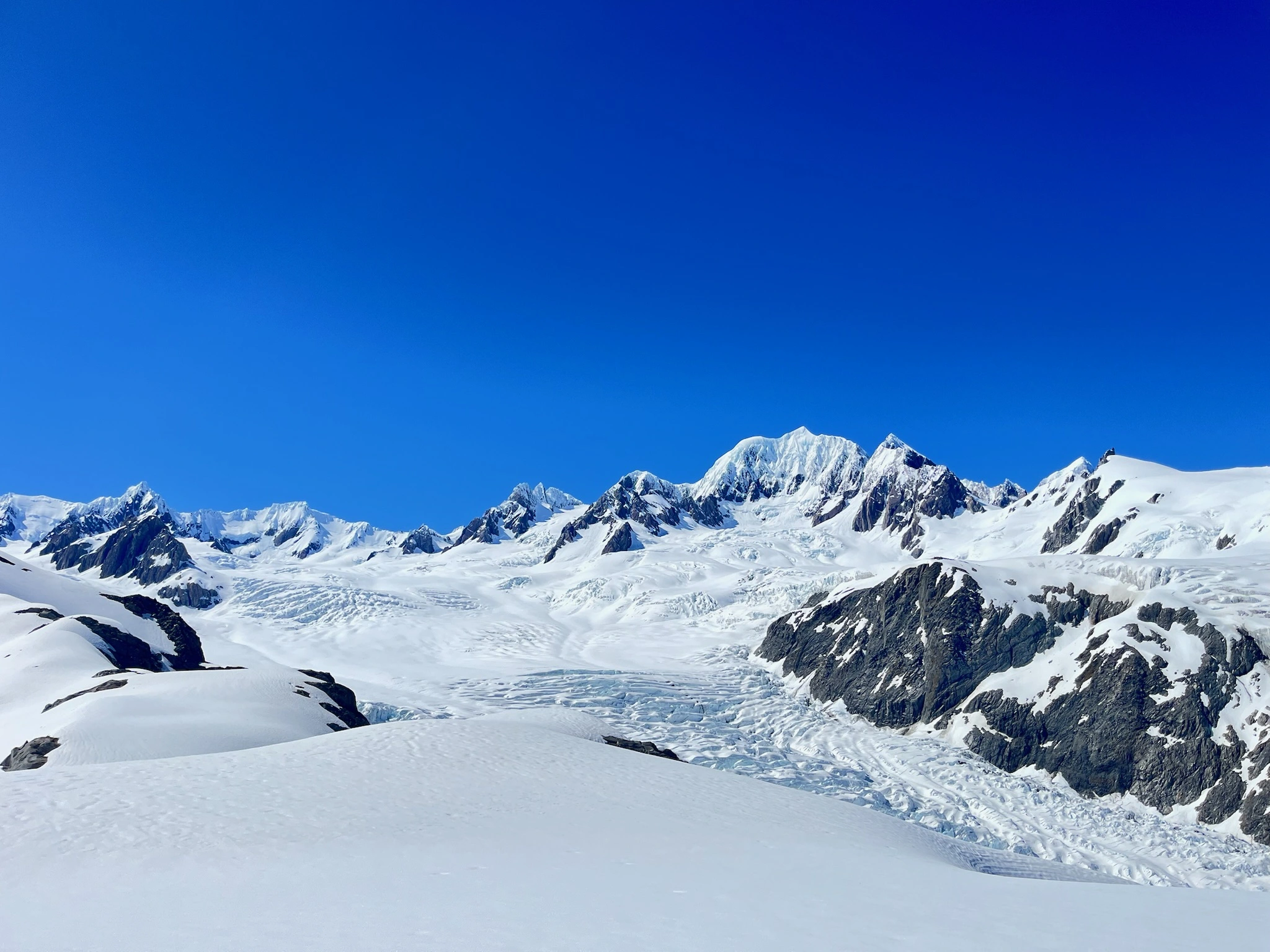
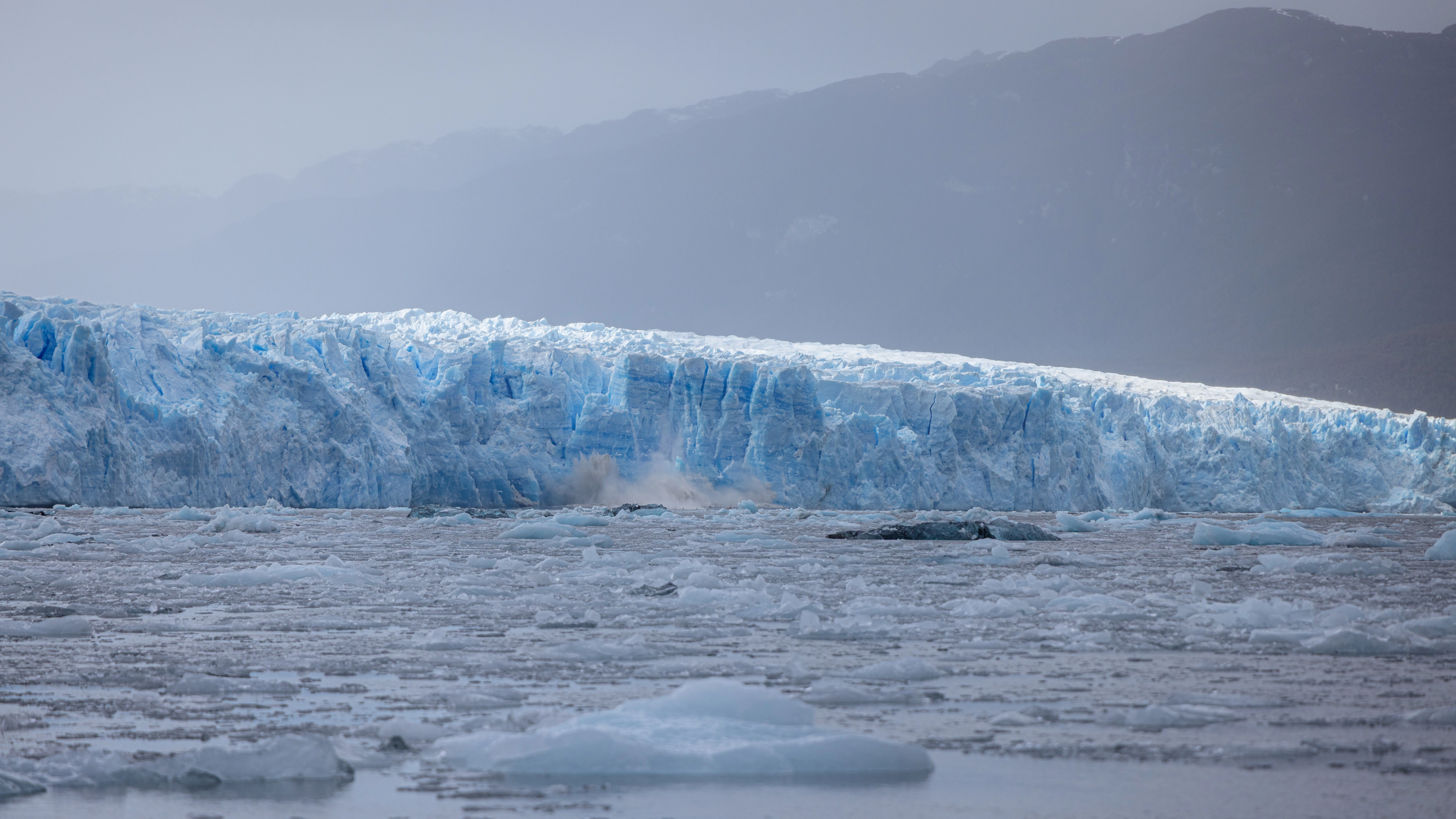
Mark Twain was quoted saying “A man who keeps company with glaciers comes to feel tolerably insignificant by and by.” There are few sights in travel quite as humbling as a glacier. You can stand on the deck of a ship (or from a rocky outpost), gaze at an enormous wall of ancient blue ice, hear a sound like thunder, and watch a chunk the size of a building tumble into the sea.
At that moment, you may have two thoughts:
Fortunately, at World Tree Destinations, we believe that travel and science belong together. And if there is one thing that glaciers teach us, it is that our planet is anything but still. Even the ice moves. Slowly, magnificently, and occasionally with a rather loud and dramatic splash.
So let’s put on our imaginary layers and toques, step into the field laboratory, and explore some of the coolest features on Earth.
Water is made of molecules containing two hydrogen atoms and one oxygen atom (H₂O) - dihydrogen monoxide for all you Grade 10 science types.
In liquid water, these molecules are constantly moving, colliding and forming temporary hydrogen bonds with neighbouring molecules. When water cools to approximately 0°C (at standard atmospheric pressure), its molecular movement slows sufficiently for an ordered crystalline structure to form. The molecules arrange themselves into a hexagonal lattice, held together by hydrogen bonds.
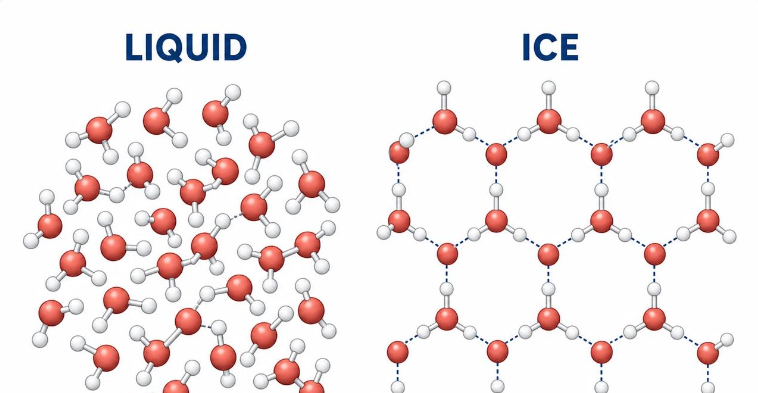
Here is the interesting part: Ice is less dense than liquid water. As water freezes, its molecular structure expands, creating more space between molecules. This is why ice floats.
This unusual property is essential to life on Earth. Lakes freeze from the surface downward, leaving liquid water beneath the ice where aquatic organisms can survive.
Next Up: What Exactly Is a Glacier?
A glacier is a large mass of ice that forms on land when snow accumulates year after year, survives the summer melt, and gradually compresses into dense glacial ice. Fresh snow contains plenty of air between its delicate crystals. As more snow piles on top, the lower layers are compressed. Over time, the snow changes into granular firn and eventually into solid glacier ice.
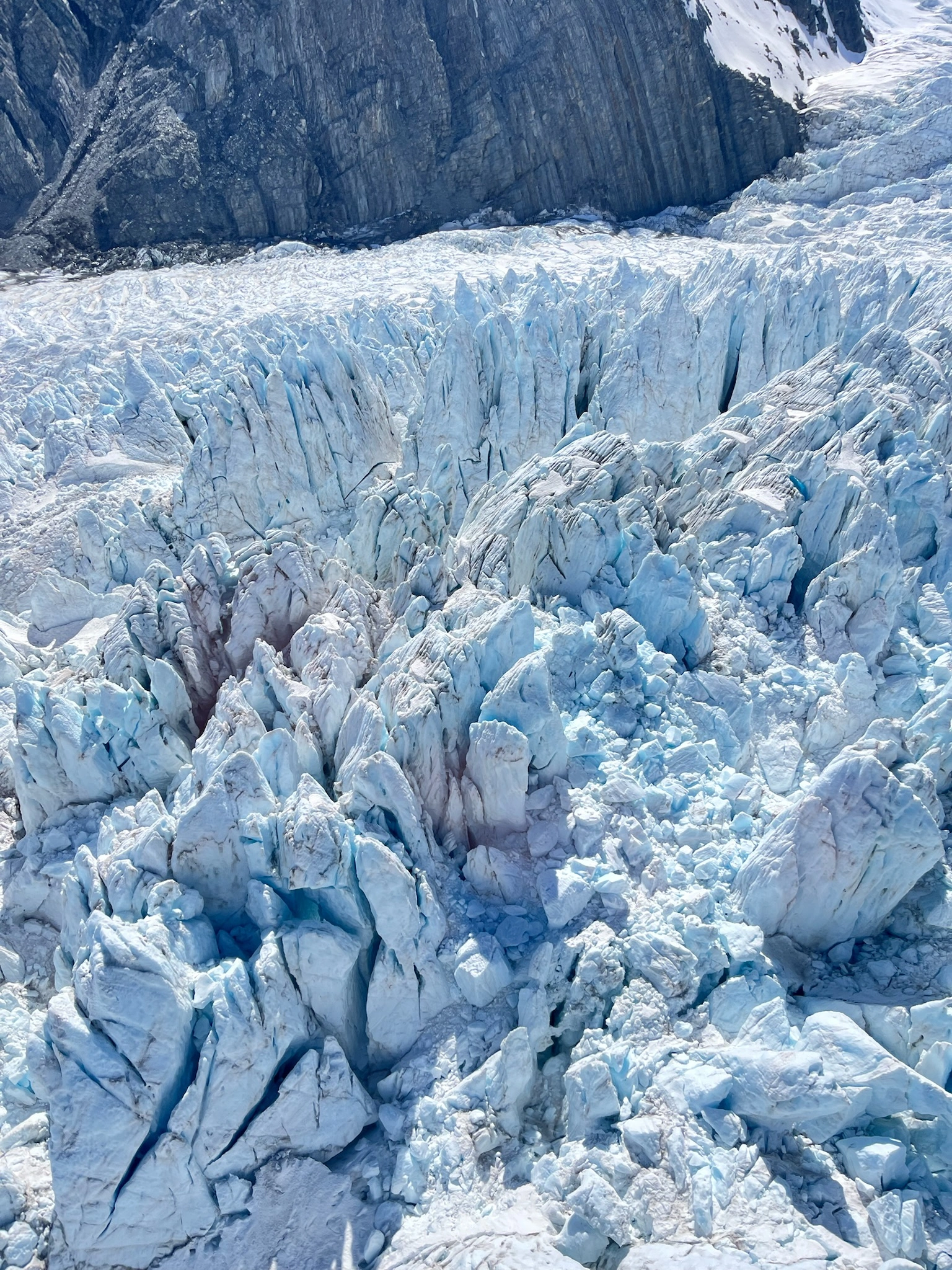
Think of it as nature’s longest-running compression experiment. No hydraulic press required. Just gravity, time, and an astonishing amount of snow.
Eventually, the accumulated ice becomes thick enough to flow under its own weight and then glaciers move. They may travel only metres or tens of metres in a year in some locations, while other glaciers move much faster. The speed depends on factors such as slope, ice thickness, temperature and conditions beneath the ice. A glacier is essentially a frozen river.
Glaciers also act as natural archives. Air bubbles trapped within ancient ice preserve samples of past atmospheres, while layers of snow and ice record clues about previous climates. Scientists can drill ice cores to investigate how Earth's climate has changed over thousands of years. In other words, a glacier is not merely a spectacular backdrop for your holiday photographs. It is a working record of our planet's history.
An icefield is a vast area of interconnected ice covering mountainous terrain. Unlike a large, dome-shaped ice cap, an icefield is strongly influenced by the mountains and valleys beneath it. Imagine a giant frozen blanket draped over a mountain range. The peaks and ridges influence where the ice flows, and individual glaciers drain away from the icefield through valleys and passes.
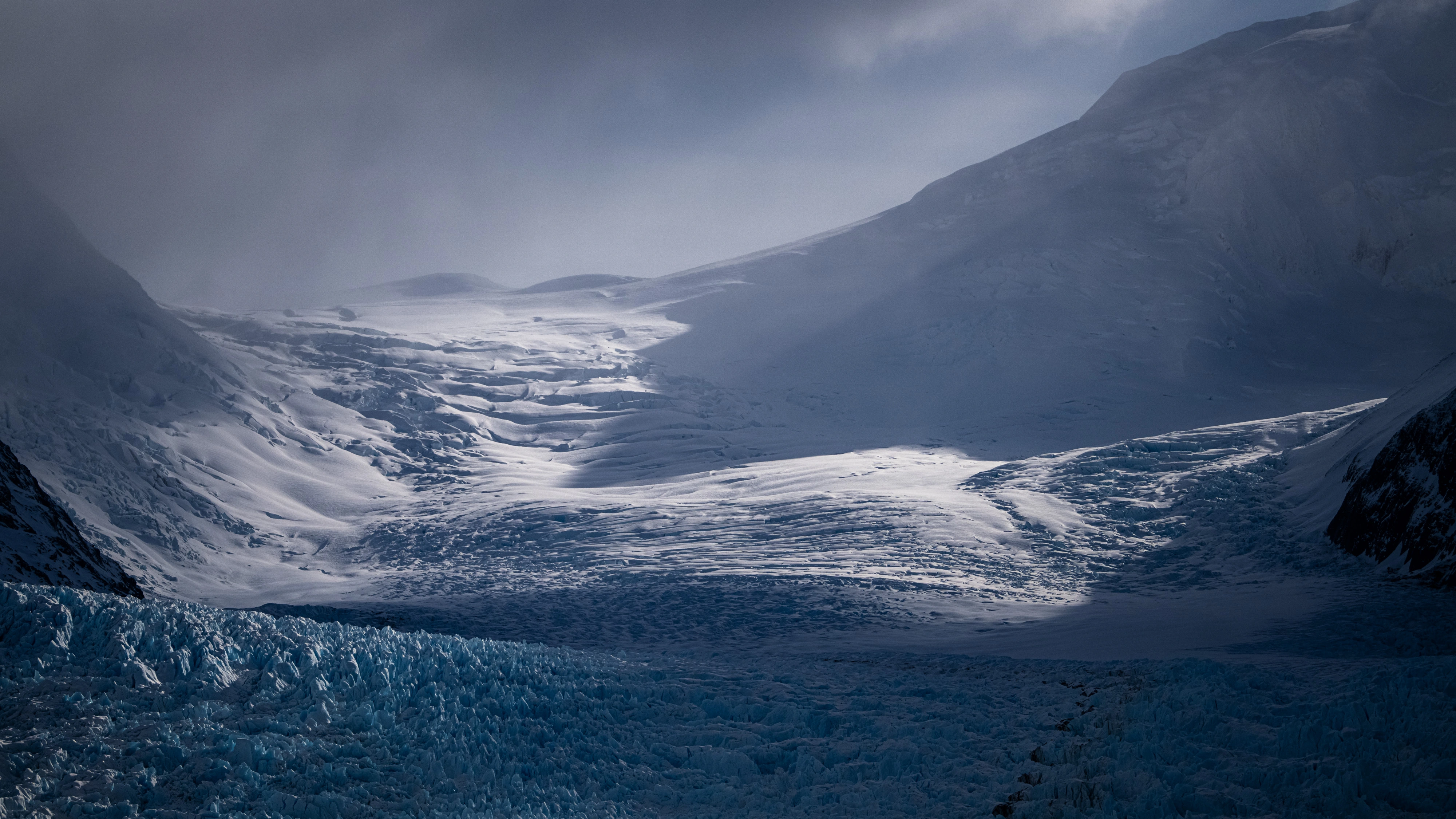
One of Canada's most spectacular examples is the Columbia Icefield in the Canadian Rockies, located along the Icefields Parkway between Banff and Jasper national parks. This enormous accumulation of ice feeds several glaciers, including the Athabasca Glacier. It is a remarkable place to appreciate the relationship between snowfall, mountain topography, flowing ice and meltwater.
And here is a fun geographical connection: water from the Columbia Icefield can eventually reach three different oceans. Depending on which glacier and drainage route it follows, that water may travel towards the Pacific, Atlantic or Arctic Ocean. One icefield. Three oceans. That is quite an ambitious travel itinerary for a snowflake.
Many glaciers flow down mountain valleys, following the landscape much as a river follows its channel. As the ice moves, it erodes bedrock, transports rock fragments and reshapes the surrounding terrain. Over long periods, glaciers can carve deep valleys with broad U-shaped cross-sections, leaving behind dramatic cliffs, hanging valleys and lakes. This is one reason glaciated landscapes are so visually distinctive. The mountains have effectively been remodelled by an enormous, slow-moving sculptor.
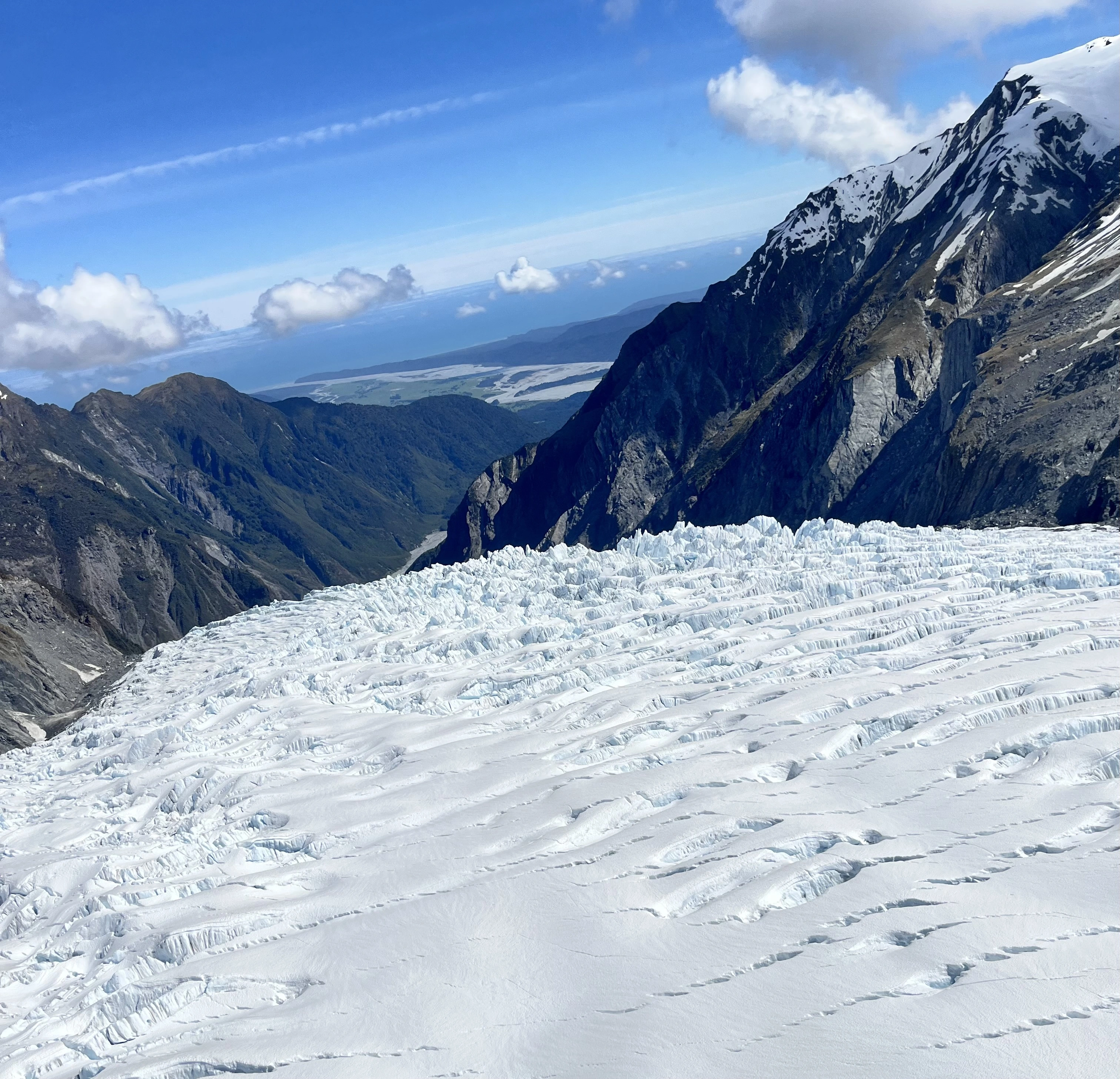
The sculptor's tools? Pressure, abrasion, plucking and meltwater.
The sculptor's schedule? Geological time.
The sculptor's attitude towards deadlines? Unhurried.
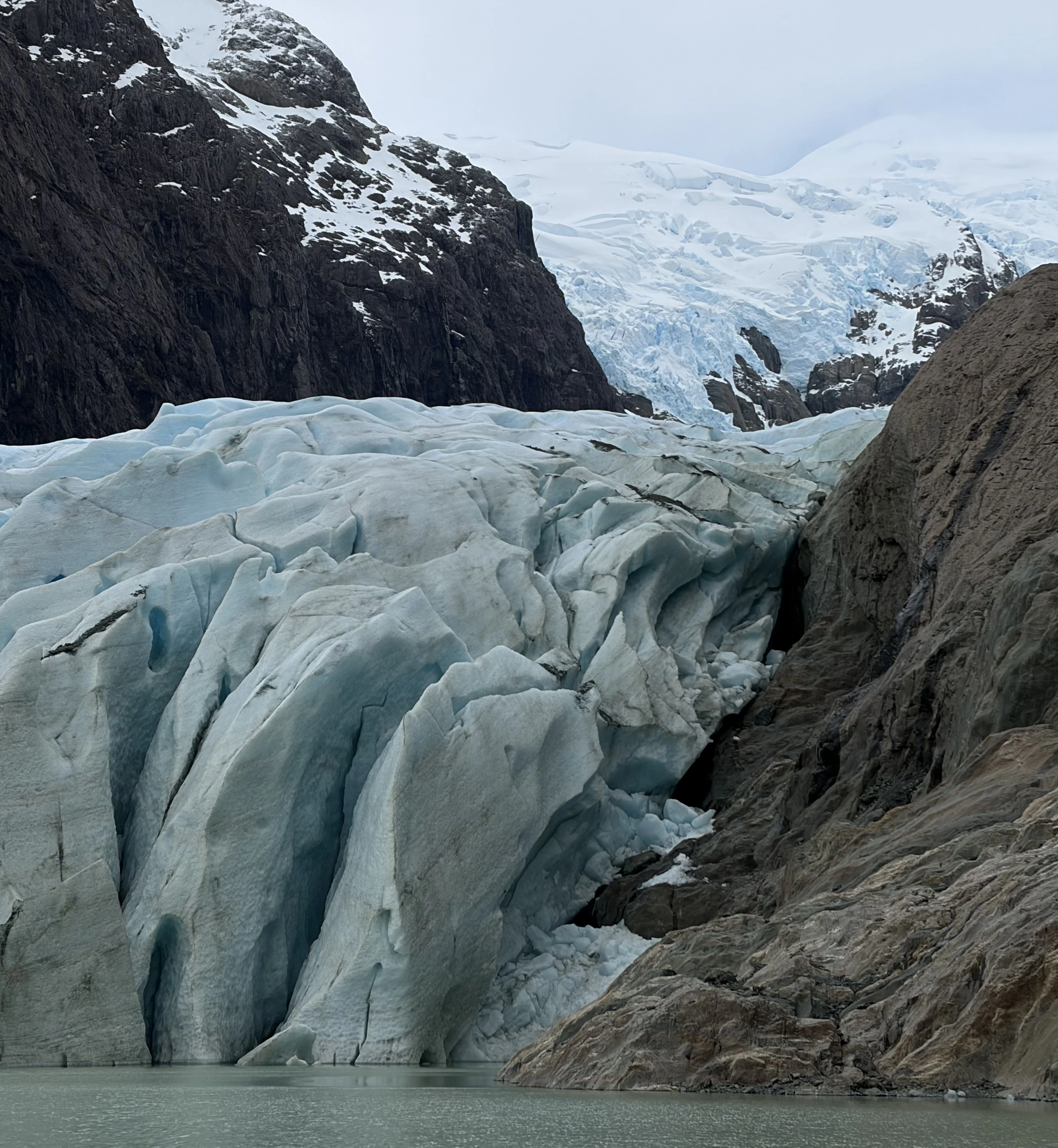
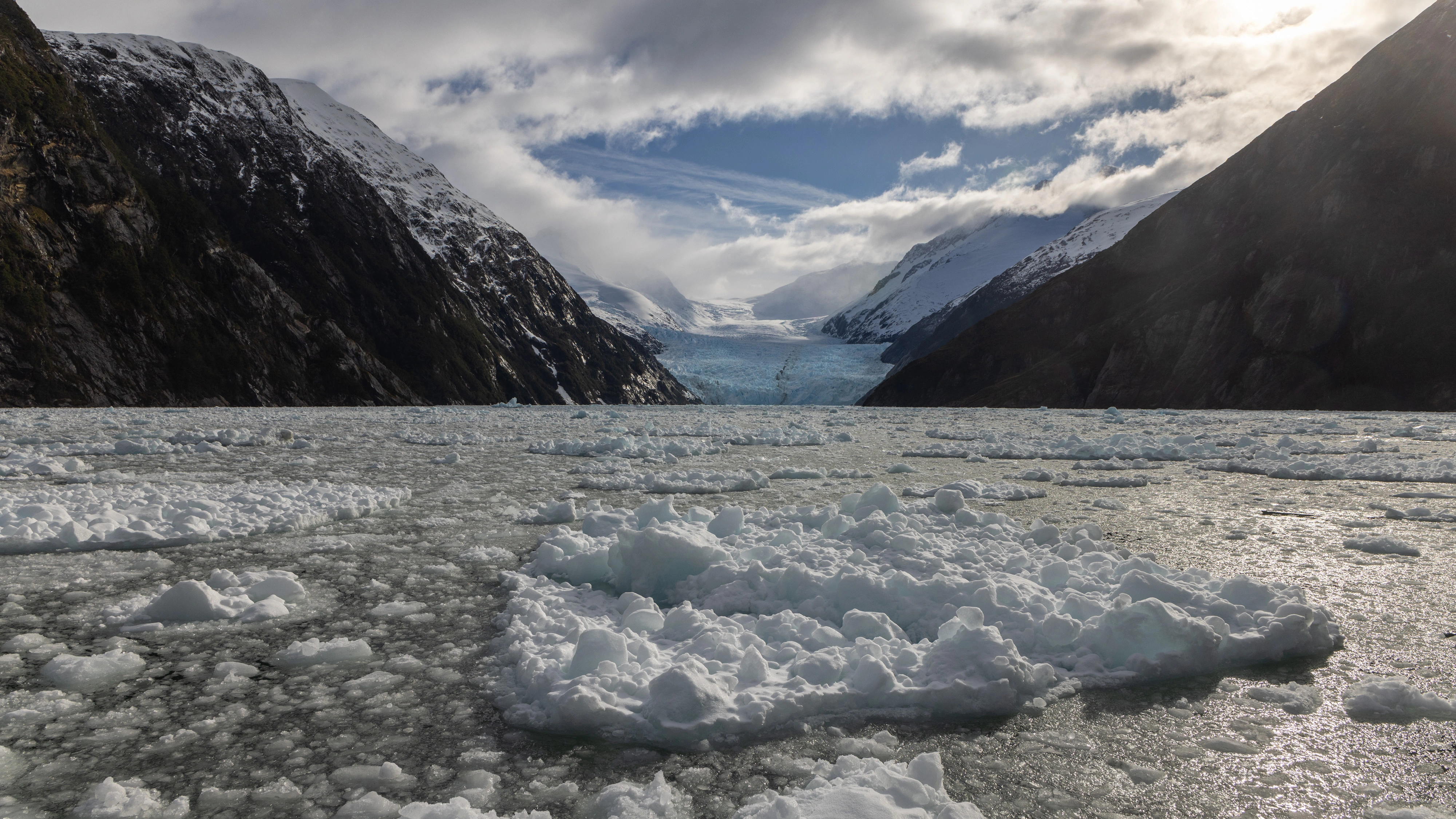
Now things get particularly exciting for cruise travellers. A tidewater glacier is a glacier that reaches the sea. Its terminus—the end of the glacier—may form an immense face of ice rising above the water. As the glacier flows forward, fractures develop within the ice. Large blocks can break away and fall into the ocean in a process known as calving. The resulting sound can be extraordinary: a deep crack, a tremendous roar and then a splash as the ice enters the water.
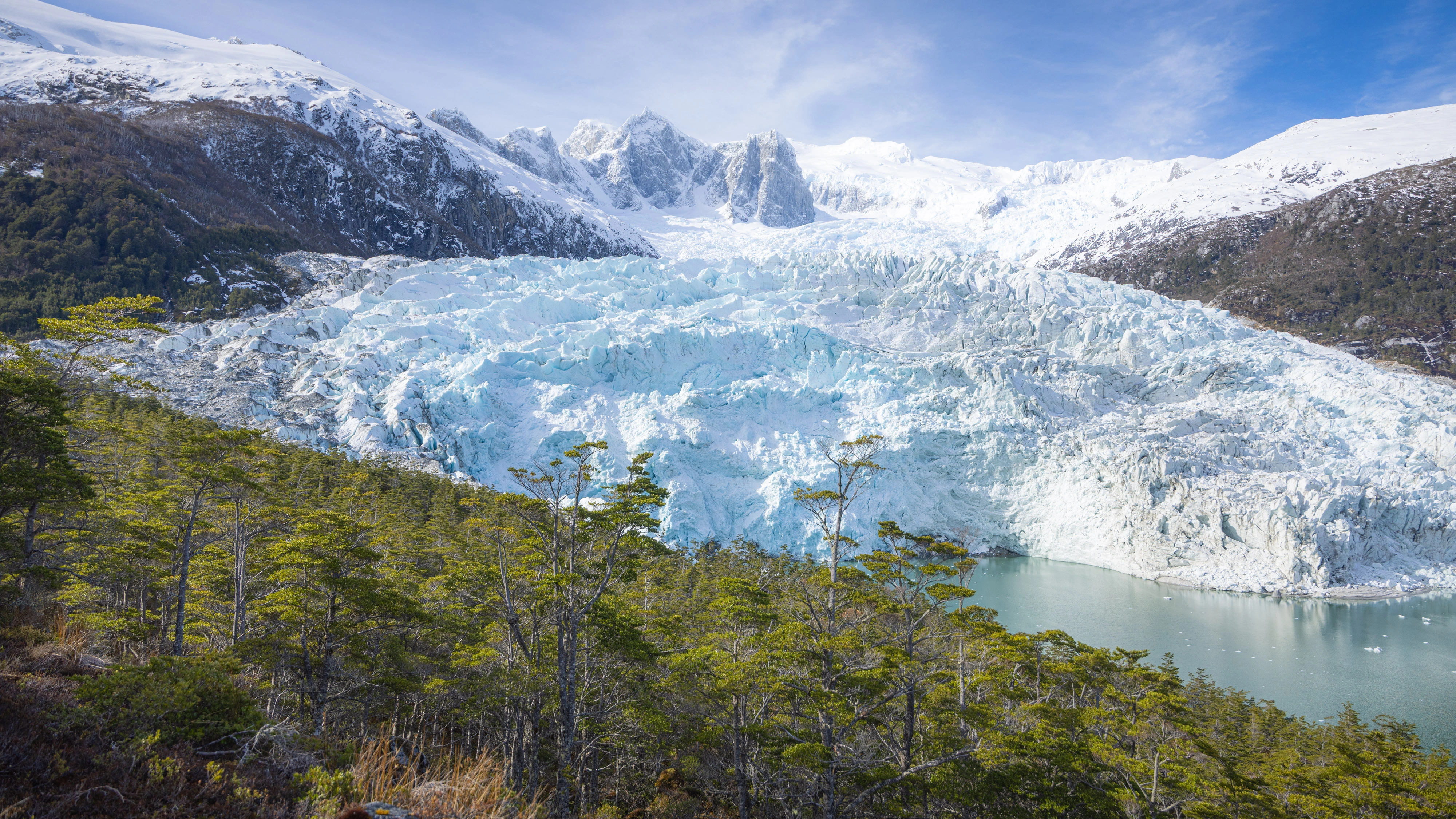
It is tempting to call this a glacier giving a performance. Scientifically, however, it is the result of stresses within the ice, fractures, and interactions between the glacier and its environment. Tidewater glaciers are particularly fascinating because their behaviour depends on more than air temperature alone. Ocean temperatures, fjord depth, bedrock shape, ice thickness and the amount of ice flowing towards the sea all influence whether a glacier advances, retreats or remains relatively stable. Some tidewater glaciers retreat rapidly; others may advance for a time even in a warming climate. The science is complex, and scientists study these glaciers carefully because their behaviour can influence coastal ecosystems and the rate at which land-based ice contributes to sea-level rise.
For travellers, some of the world's most memorable examples can be found in Alaska's Glacier Bay and Hubbard Glacier region, as well as in Patagonia and parts of the Arctic.
And yes, you will hear calving if you are on deck or the ship's captain may announce that a glacier is calving. That is your cue to put down the coffee, find your camera and look up from your phone. Nature is about to remind you who has the better special-effects department.
When a large piece of glacier ice breaks away and floats freely in the water, it becomes an iceberg. The familiar rule is that approximately 90 percent of an iceberg lies beneath the surface, leaving only about 10 percent visible above the water. The actual proportion varies with the iceberg's shape, density and orientation, but the principle is correct: what you see is only a small part of the story.
This happens because ice is less dense than liquid seawater, so it floats. Much of the iceberg's mass remains submerged. That hidden underwater bulk explains why icebergs deserve respect (more than what was given by Captain Edward Smith). They may roll or rotate as they melt and change shape, and smaller pieces of ice can be difficult to see in rough seas. Icebergs also come in a remarkable variety of shapes. Some are tall and jagged; others are broad and relatively flat. Their appearance depends on how they broke away, how they have weathered and melted, and whether they have overturned.
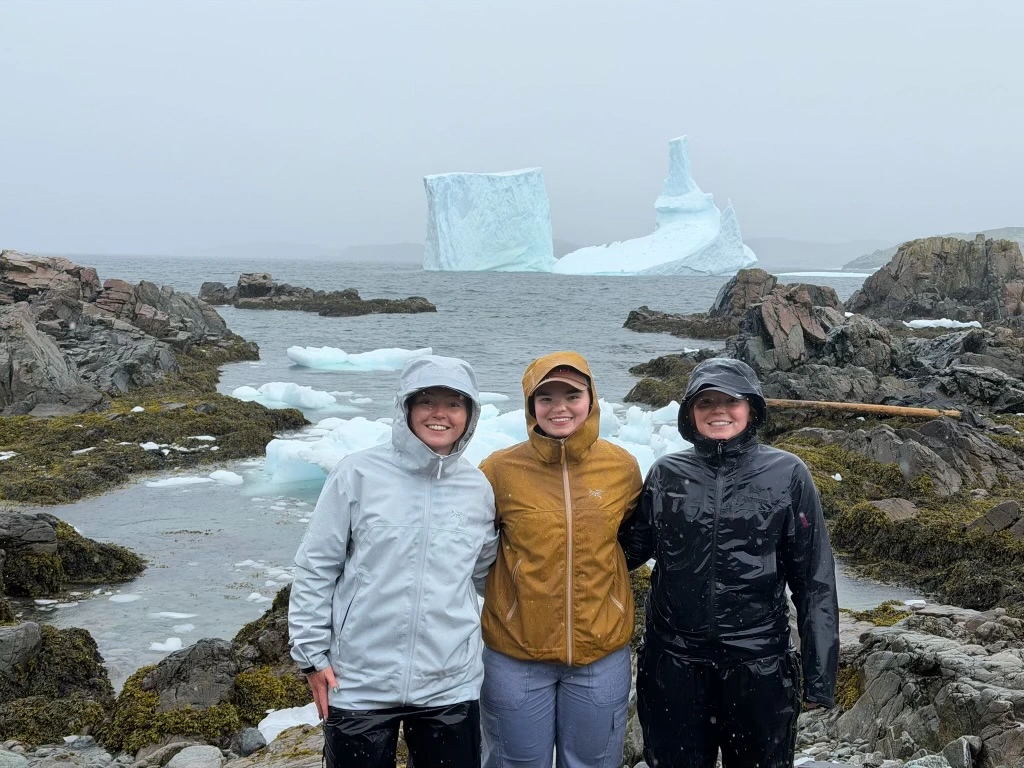
In keeping with our Canadian theme, the southeastern coast of Nunavut, Labrador, and Newfoundland is affectionately termed Iceberg Alley. Iceberg Alley is one of Canada's most spectacular natural attractions. It is a stretch of the North Atlantic where enormous icebergs drift south from the Arctic, creating one of the world's most remarkable seasonal wildlife and natural sightseeing experiences.
Every spring and early summer, these ancient giants make their way down the Labrador Current, passing the Labrador coast and Newfoundland before eventually melting into the Atlantic. It is a spectacular meeting of geography, ocean currents, climate and natural history.
This distinction is worth remembering, particularly if you are heading to Alaska, Greenland, Antarctica or Svalbard. Glacial ice forms on land from accumulated snow. When pieces break off into the ocean, they can become icebergs. Sea ice forms when seawater freezes. It floats on the ocean as sheets, floes and other forms of marine ice. They may both look like ice—and both may make a cruise photographer very happy—but they have different origins.
There is also an important distinction when discussing sea-level rise. Melting floating ice, such as an iceberg, does not directly raise sea level appreciably because it already displaces water. In contrast, when land-based glacier ice flows into the ocean and adds water that was previously stored on land, it contributes to rising sea levels. Land ice is the ice that raises sea levels - adding more ice cubes from the ice tray into your glass of Pepsi is a simple demonstration of how levels rise when land ice is added and displaces its weight.
This is why scientists pay such close attention to the mass balance of glaciers and ice sheets: the difference between the ice they gain and the ice they lose.
Glacial moraines are accumulations of rock, gravel, sand and other debris transported and deposited by a glacier. Terminal moraines form at the glacier’s farthest point of advance, marking the maximum extent reached by the ice. Medial moraines appear as dark bands of rocky debris running down the middle of a glacier, formed when two glaciers merge and their adjacent lateral moraines combine. Lateral moraines develop along the sides of a glacier as it scrapes and carries rock debris from the surrounding valley walls. Together, these three types of moraines provide valuable clues to a glacier’s movement, history and changes in size over time.
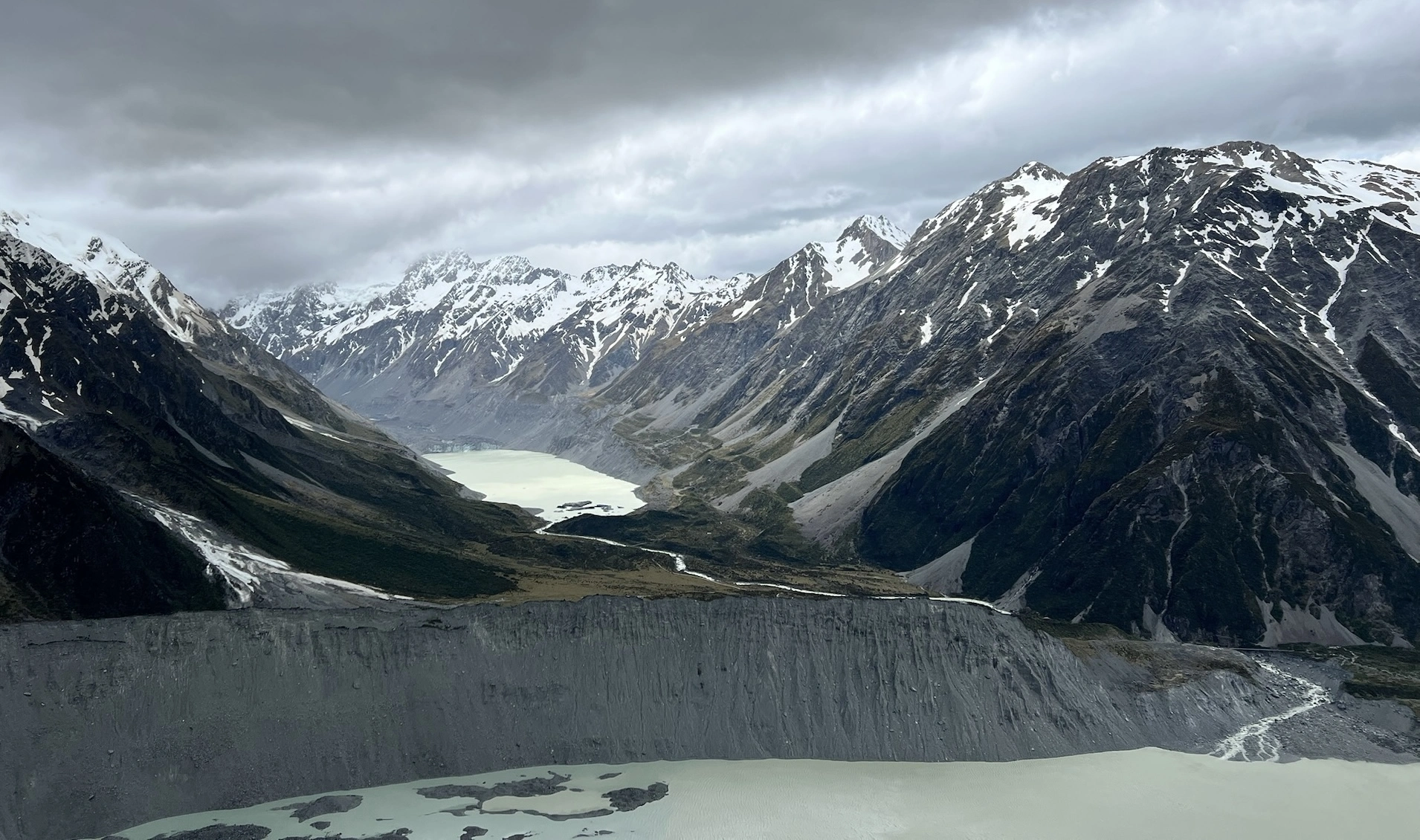
Glacier ice can appear white, pale blue, turquoise or an intense deep blue.
The explanation lies in the way light interacts with ice. Dense, older ice with fewer air bubbles absorbs more red light than blue light, allowing more blue light to be scattered back towards our eyes. Tiny air bubbles, cracks, impurities, ice thickness and the angle of sunlight all affect the final appearance.
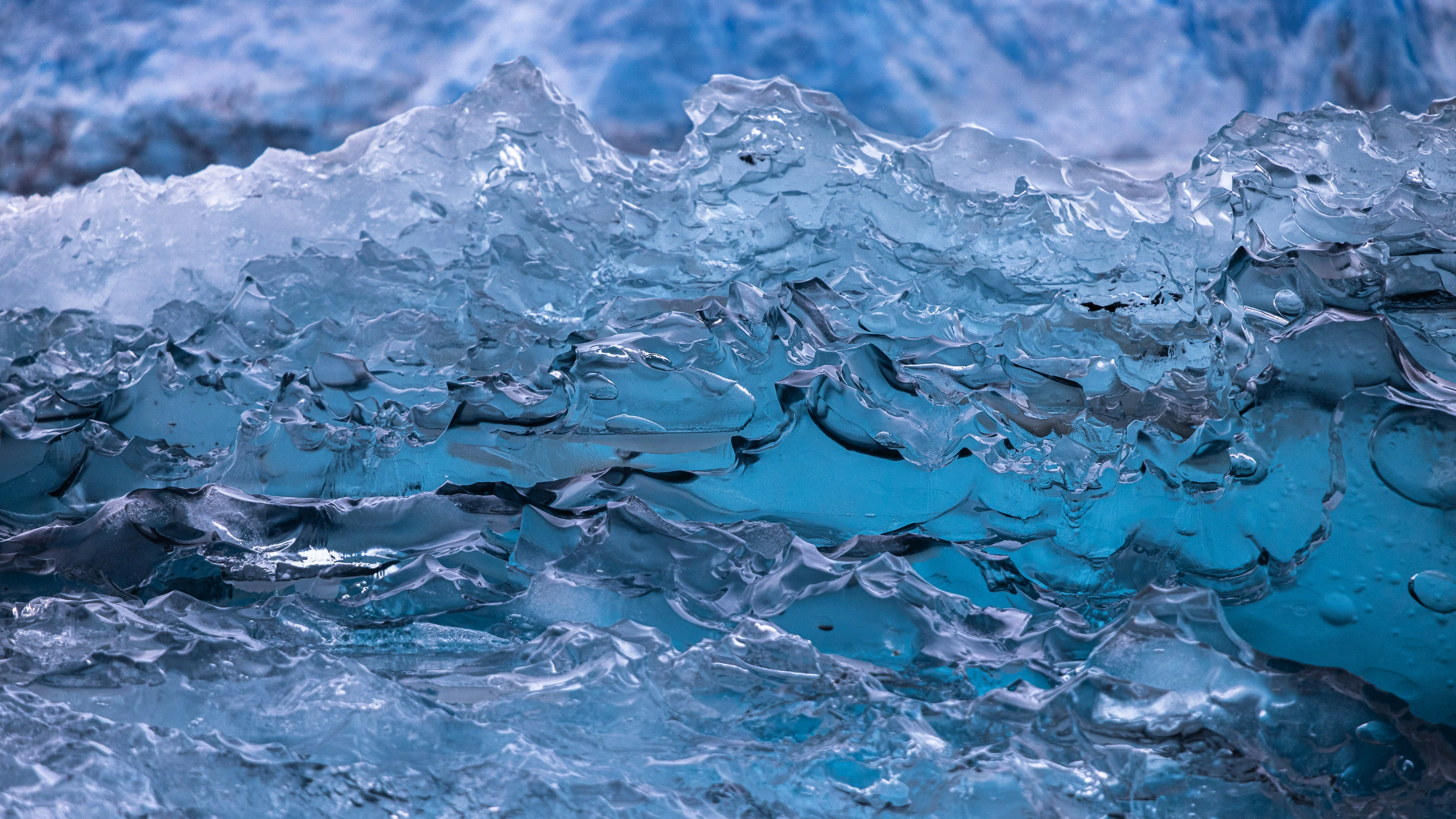
Fresh, bubbly ice may look white. Older, compact ice can appear blue. Meltwater pools may look turquoise because of the combined effects of light absorption, scattering and the conditions beneath the water.
So the next time you see an iceberg glowing turquoise or deep blue, remember that you are looking at a little lesson in optics. A very cold lesson in optics.
Glaciers respond to climate. When they gain more snow than they lose through melting, evaporation and calving, they can grow. When losses exceed gains, they lose mass. Many of the world's glaciers are shrinking as temperatures rise, although their responses vary by region and individual glacier. Changes in snowfall, ocean conditions and the shape of the land beneath the ice also matter. Glacier retreat can affect freshwater supplies, ecosystems, landscapes and the timing of seasonal meltwater. The loss of land-based ice also contributes to global sea-level rise.
For those of us who travel to see glaciers, this creates a special responsibility. We can admire these landscapes while also understanding that they are changing, documenting what we observe, and supporting responsible tourism and conservation.
A photograph taken today may become a valuable record of a landscape that looks different decades from now.
At World Tree Destinations, we believe the best journeys do more than take us somewhere beautiful. They help us understand the planet we call home.
Glaciers remind us that Earth operates on many different timescales. Snowflakes can begin a journey that takes centuries to become solid glacier ice. That ice may then travel slowly through a mountain valley before breaking into the sea in a matter of seconds. The process connects atmosphere, land, ocean and climate in one extraordinary system.
So the next time you stand before a glacier, take a moment before reaching for the camera. Look at the crevasses, the layers, the meltwater streams and the towering ice face. Listen for the cracks and groans. Think about the snowfall that built it and the journey the ice has taken. (And then take the picture… we are a travel company.)
Science and travel are a dandy partners. That is one reason travel can be so powerful: it turns an abstract scientific concept into a real place, a personal memory and a reason to care.
 World Tree Destinations
Sign up for our newsletter to learn about the latest product news and deals. Also receive exclusive offers, contest details and giveaways.