
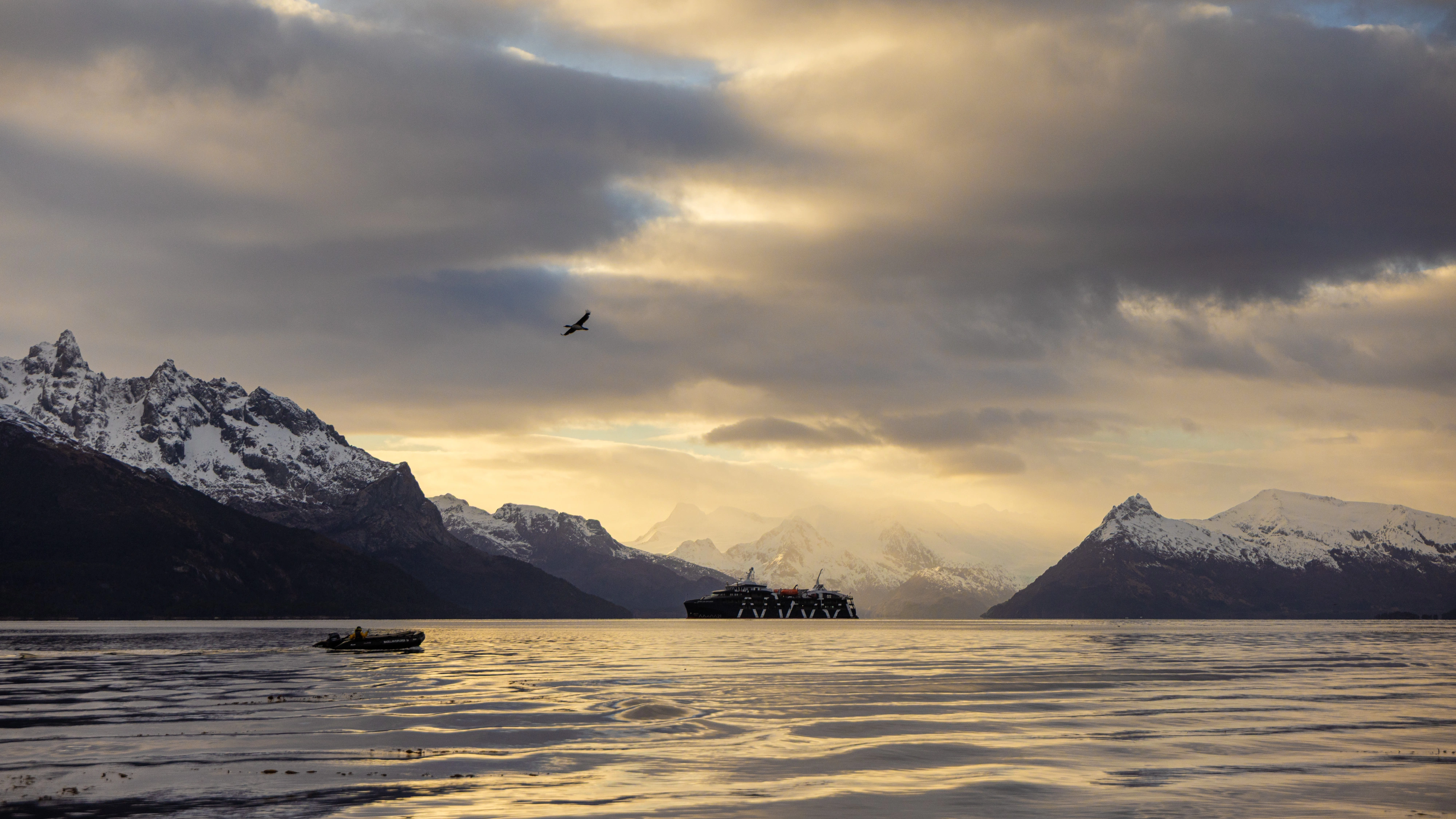
There are places in the world where the landscape seems almost too grand to comprehend. Mountains plunge into the sea, ancient glaciers carve their way through valleys, waterfalls tumble from impossible heights, fjords covered by the bluest of ice, and narrow waterways lead into wilderness that remains difficult to reach by land.
Welcome to Patagonia.
Stretching along the southern reaches of South America, western Chile is a world of labyrinthine fjords, remote islands, temperate rainforests and immense fields of ice. One of the most remarkable ways to experience it is by expedition ship, following waterways once explored by early navigators and venturing into places where nature remains firmly in charge.
For travellers who love geography, wildlife, geology, history, and a little sense of adventure, the Patagonia and Chilean Fjords voyage aboard the Magellan Explorer offers a fascinating journey through this extraordinary corner of the world.
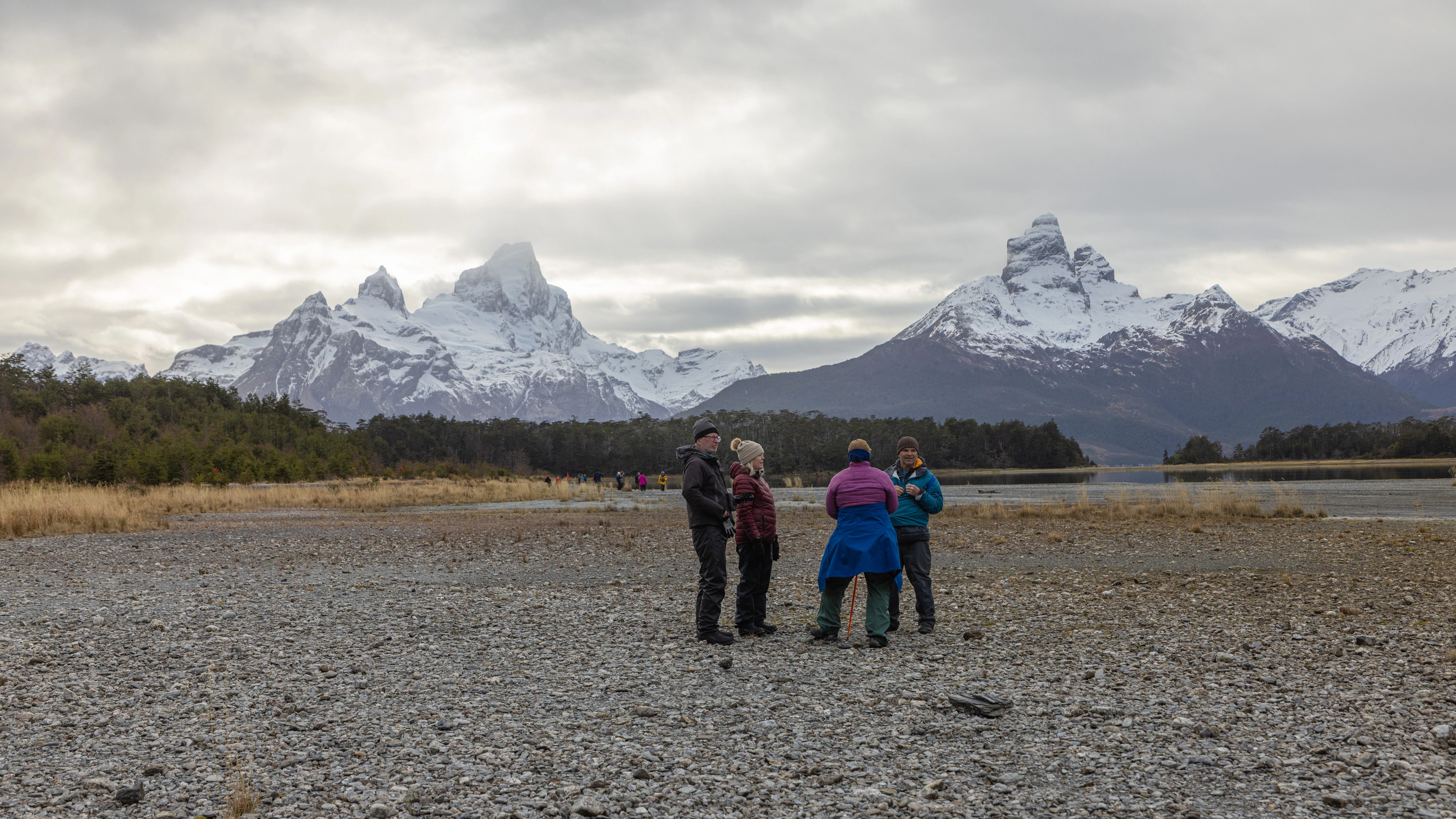
And although we had some idea before we began this adventure, we quickly discovered an expedition cruise is a very different experience from a conventional cruise.
Meet Antarctica21 and the Magellan Explorer
Antarctica21, often known as A21, is a Chilean expedition travel company best known for pioneering fly-and-cruise journeys to Antarctica. Its voyages are designed around exploration, natural history and access to some of the most remote environments on Earth.
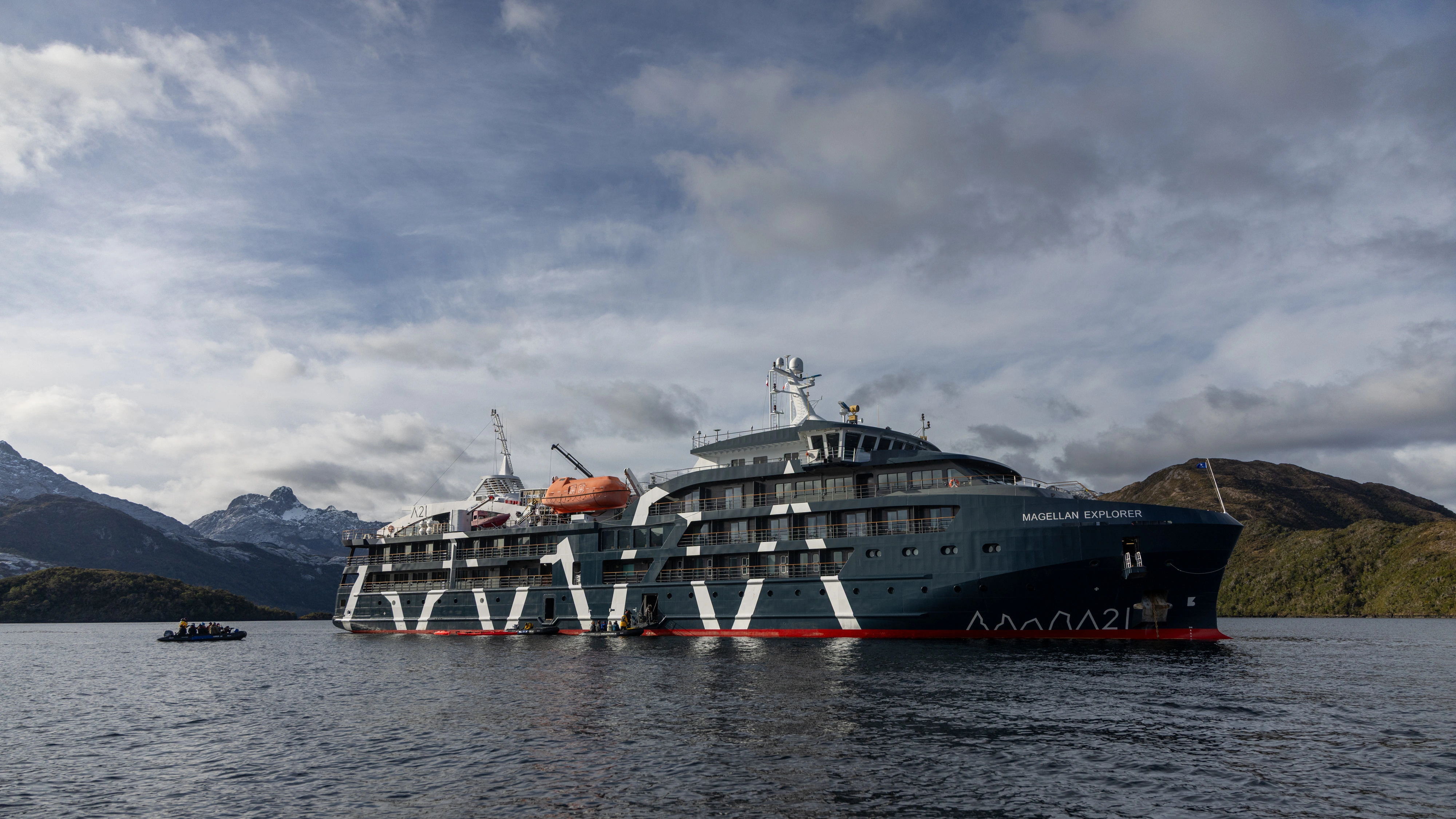
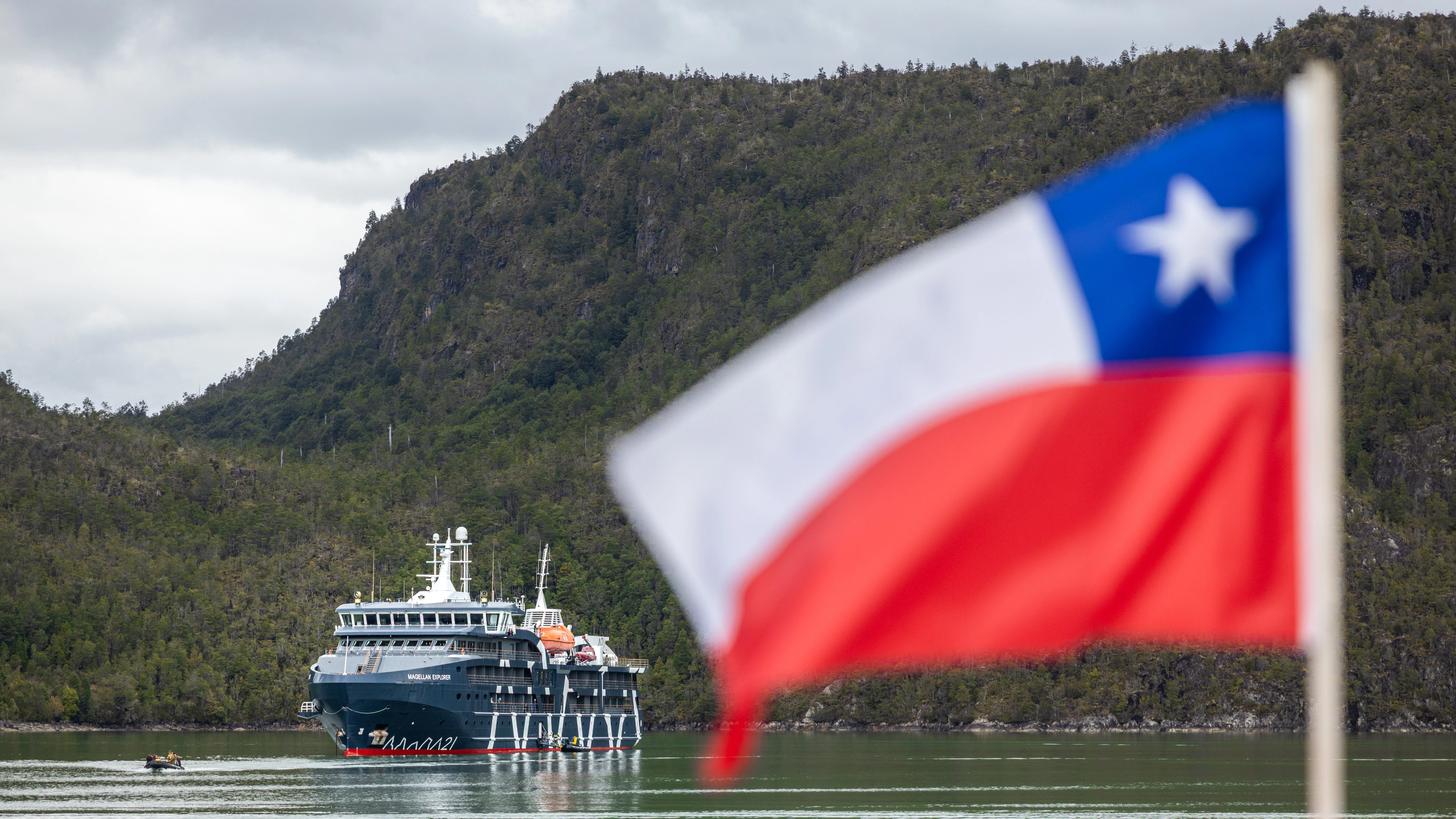
The Magellan Explorer was purpose-built for polar expedition travel and entered service in 2019. At approximately 91 metres long, this compact vessel accommodates up to 96 guests. It offers comfortable cabins, a dining room, a bar, a library, a gym, an observation lounge and a dedicated presentation room. But the ship itself is only part of the story. On an expedition cruise, the real stars are the places you visit, the people who guide you and the experiences that take you beyond the ship.
The staff on board the Magellan Explorer was extraordinary. We understand that this was our first experience on an expedition ship BUT if every or any expedition staff is remotely close to this level…then the expedition cruise industry is indeed a remarkable industry. Kudos to Nico Danyau for assembling such a wonderful group and more kudos to expedition leader Pablo Zenleno (and his team) for his expertise, leadership, and charisma. Also, a special shout out to photography skills and generosity of A21 staff member Franciso (Pancho) Gomez. (Many of Pancho’s pictures are found in this blog and on the WTD website. Many, many times I was standing right beside Pancho taking the same shot - any guesses whose pictures are better - way better? Thanks Pancho.)
Small ship size is an obvious difference, but it is far from the only one. Here are a few things we learned.
The itinerary is always subject to change. Patience. Flexibility. Zen.
On a conventional cruise, the schedule is generally built around established ports and arrival times. In the remote fjords of Patagonia, nature has a much greater say. Wind, swell, visibility, currents, ice, and other conditions can alter the day's plans. Flexibility is essential, and the ability to adapt is part of what makes expedition travel special. A21 did not disappoint.
Zodiacs are a big part (if not the biggest part) of the adventure.
Expedition Zodiacs are sturdy inflatable boats used to take guests closer to shorelines, wildlife and glaciers. Depending on the day's conditions and activities, you may head out once or even twice a day. Sometimes the goal is a landing and a guided walk; on other occasions, it is a Zodiac cruise through a spectacular coastal landscape. Every outing brought a different perspective of Patagonia. For those concerned about getting in and out of the zodiacs, the crew and expedition staff do a remarkable job loading and unloading passengers of all ages and walks of life.
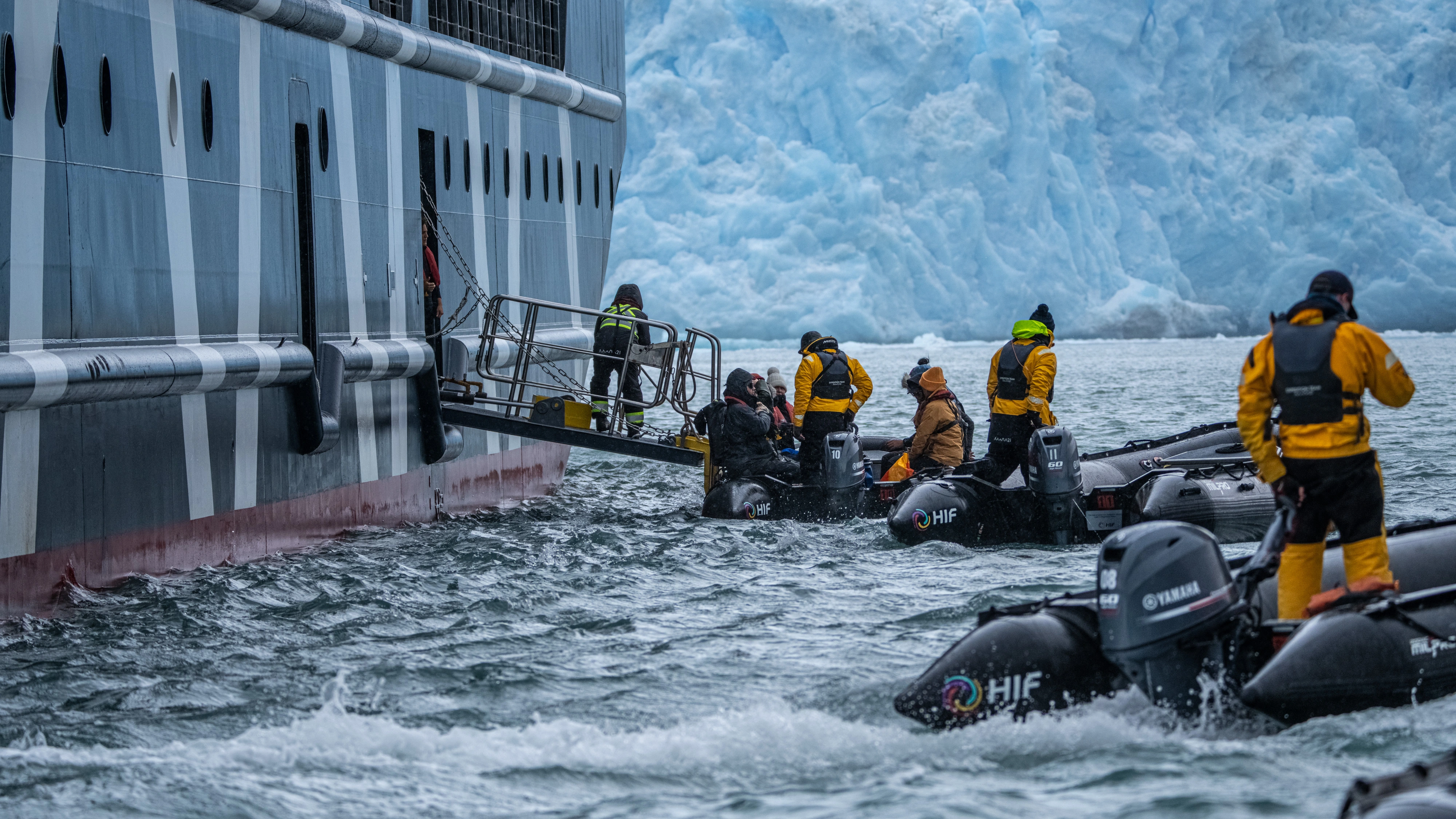
Landings and shore excursions are part of the daily rhythm.
These are not your typical shore excursions. Rather than simply docking at a large port and heading into town, expedition guests may visit remote shorelines and locations accessible only by small boat. Guided walks, wildlife observation and visits to places of natural or historical interest can all feature in the programme. Not every landing is possible, however, and some days are devoted to scenic navigation.
Safety comes first. Always.
This is a fundamental principle of expedition travel. The expedition team assesses weather, sea conditions, landing sites and other risks before activities proceed. If conditions are unsuitable, plans change. A cancelled landing or a different route is not a failure; it is a sensible decision in a challenging environment.
The expertise of the expedition staff is remarkable.
We were struck by the depth of knowledge among the expedition team. These are both experienced and educated people who can help explain the glaciers, wildlife, geology, geography and history unfolding around you. Their experience transforms a beautiful landscape into a much richer experience. Instead of simply looking at a glacier, you begin to understand how it formed, why it behaves as it does and what it tells us about the natural world. Their genuine love of Patagonia is infectious.
The days are surprisingly regimented—and surprisingly full!
This was something we hadn't fully anticipated. There are daily briefings, lectures, gatherings and preparations for the next outing. Meals are served at scheduled times, and breakfast, lunch and dinner are organised around the expedition programme. You cannot always decide to sleep in, wander down for a late breakfast and see what happens next!
There is a rhythm to the day: learn about the next destination, prepare for an outing, explore, return to the ship, attend a presentation and get ready for what comes next. Even scenic cruising often includes commentary or an educational gathering.
We found that the days were much fuller than expected. You are not simply cruising past scenery; you are actively learning about and experiencing it.
That is one of the great advantages of an expedition cruise. You come away not only with photographs (and some professional photographers), but with a deeper understanding of the places you have visited.
Our voyage began in Puerto Montt, Chile, the embarkation point for the southbound journey to Ushuaia, Argentina.
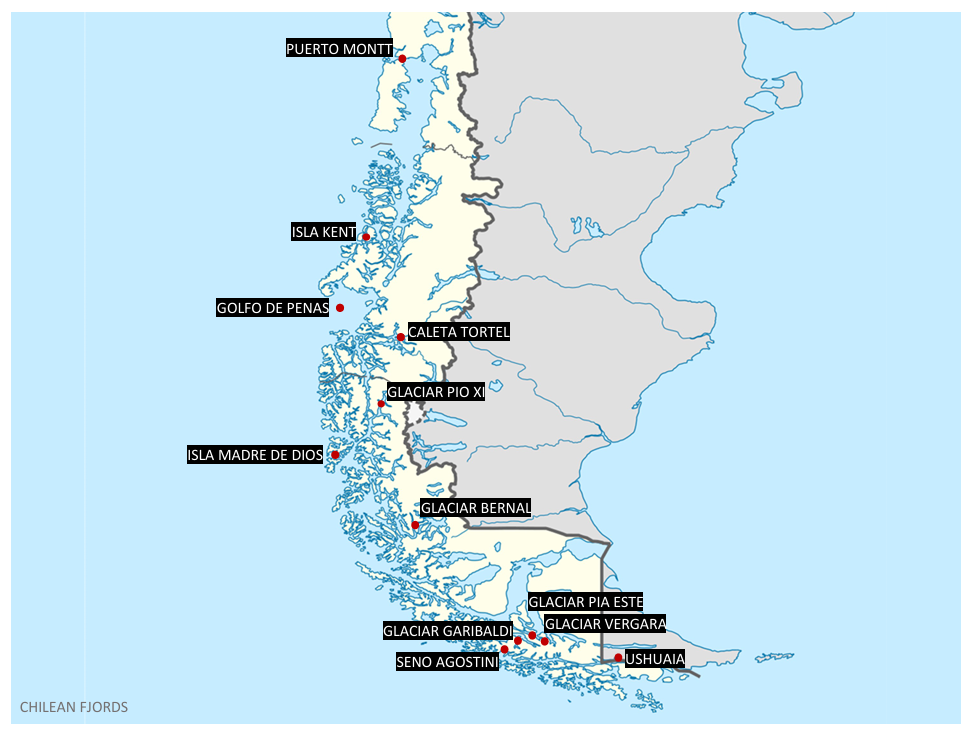
Puerto Montt is an important port in southern Chile and a gateway to the spectacular Lake District and the northern reaches of Patagonia. But rather than staying in Puerto Montt itself, we chose to stay about 30 minutes north in the charming town of Puerto Varas - situated in the Chilean Lake District. What a wonderful choice that was as Puerto Varas could easily be a vacation destination all by itself.
Situated on the southern shore of Lake Llanquihue, Puerto Varas is known for its attractive waterfront, German-influenced heritage, cafés, gardens and magnificent views across the lake. On a clear day, the scenery is dominated by two extraordinary volcanic peaks: Osorno and Calbuco.
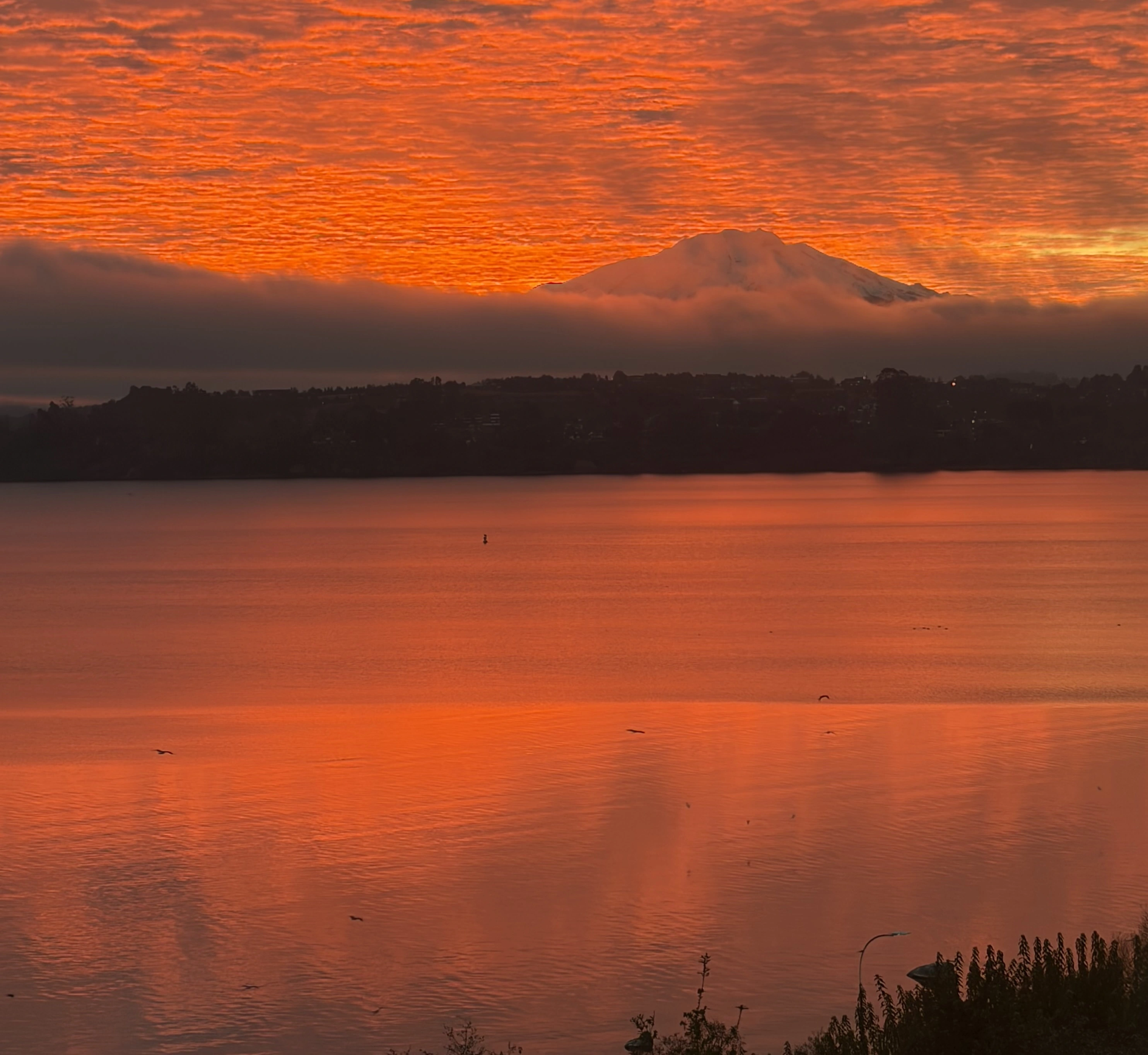
Volcán Osorno is the classic picture-postcard volcano. Its near-symmetrical cone rises to approximately 2,661 metres, and its snow-covered summit often resembles a miniature Mount Fuji. The volcano last erupted in 1834–35, and its glaciated summit makes it an impressive presence in the landscape.
Then there is Volcán Calbuco, rising to approximately 2,003 metres. Unlike the almost perfectly conical Osorno, Calbuco has a more rugged profile and is one of the region's active volcanoes. Its major eruption in April 2015 sent an ash column high into the atmosphere, providing a dramatic reminder that this beautiful landscape is still geologically alive.
From Puerto Varas, we made our way to Puerto Montt to board the Magellan Explorer and begin our expedition south. It was a glorious day and the embarkation was efficient and simple as only 66 passengers were on board this cruise and the Magellan Explorer had close to the same number of staff helping all of us board.
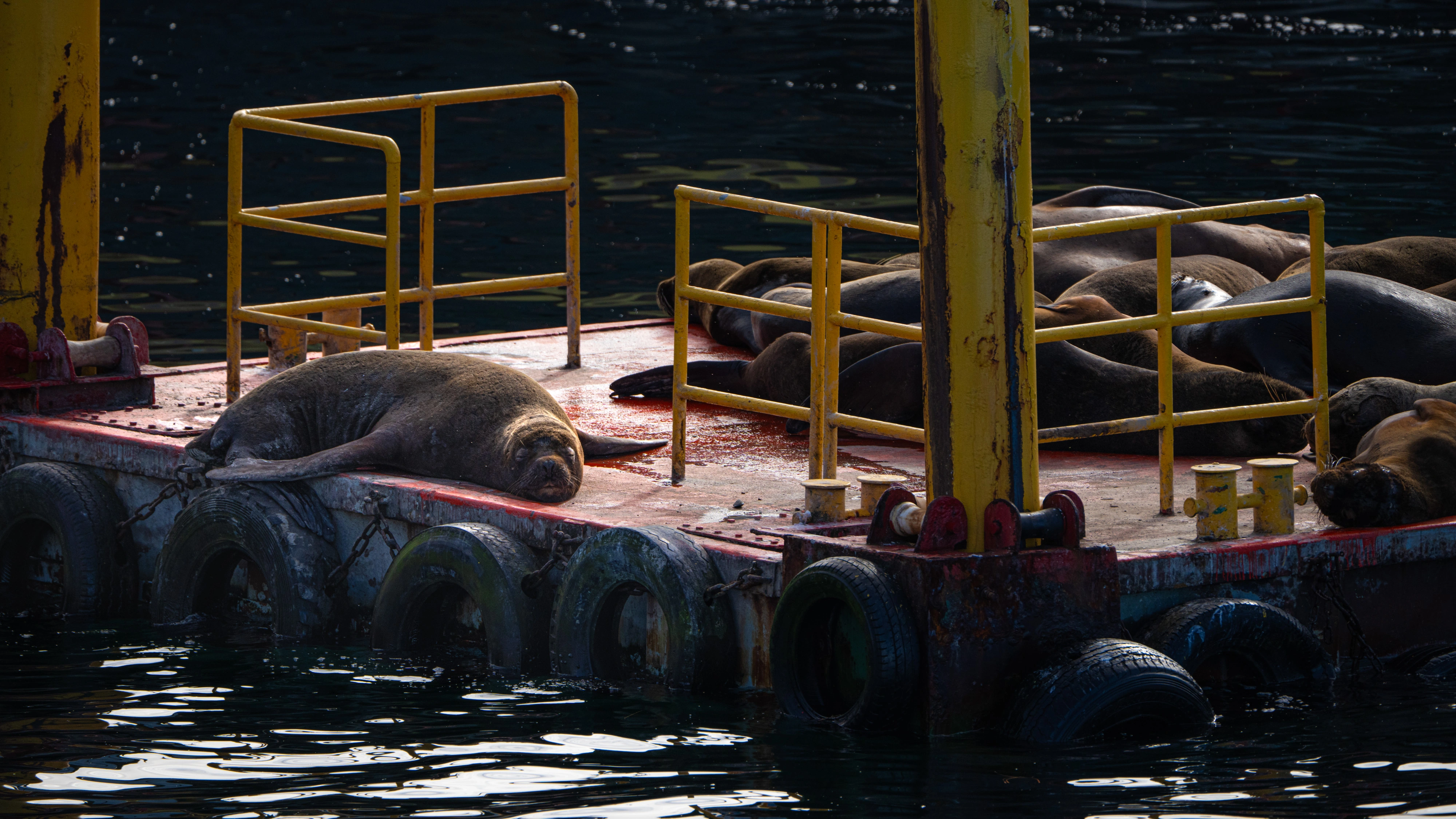
As the voyage continued into Chile's island wilderness, we entered a world of forested slopes, rocky shores and sheltered waterways.
Isla Kent, part of the Chonos Archipelago region, illustrates the extraordinary remoteness of this coastline. Evergreen forests blanket the hillsides, cold Pacific waters surround the islands, and roads and settlements are scarce across much of the area.
This is a landscape best appreciated from the water. An expedition ship can navigate the intricate network of channels and islands, while Zodiac outings can bring guests closer to the shore when conditions permit.
The region also has an intriguing connection to Charles Darwin, who travelled through the Chonos Archipelago aboard HMS Beagle in 1834-35. Imagining those early expeditions into a coastline that was still being charted adds another dimension to the experience.
A beach landing on a small beach led us to a wet and sometimes iffy trail. It would have been the worst portage ever - a canoe on your back would have made it almost impassable! Fortunately, there were no canoes involved, and after 10-15 minutes the path opened up onto this amazing, isolated beach looking west into the South Pacific Ocean. We stayed on the beach for a while taking in a place that very few people venture to.
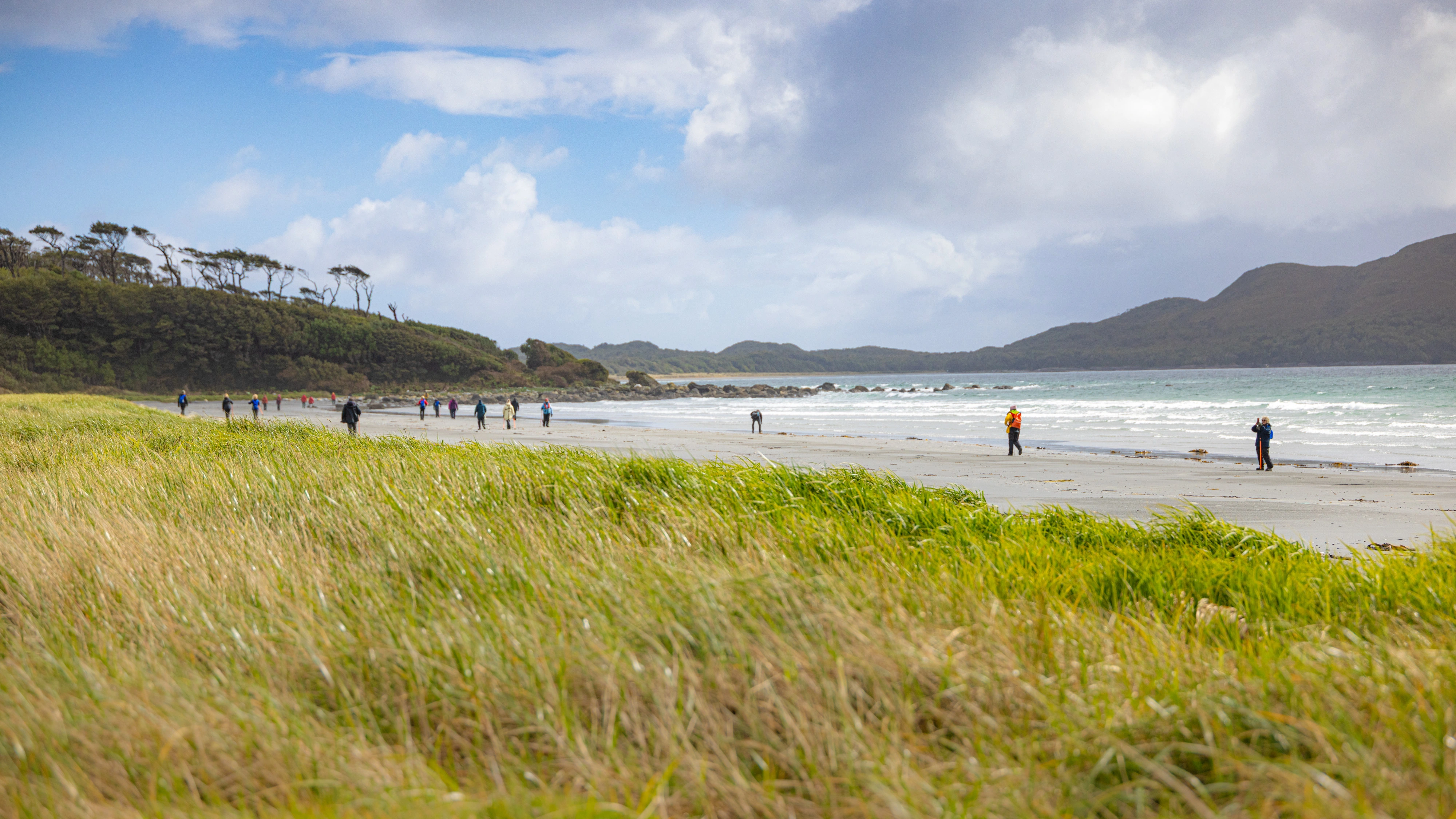
For World Tree travellers, Isla Kent is a reminder that exploration does not always mean climbing a mountain or reaching a famous landmark. Sometimes, it means quietly entering a landscape that has remained largely unchanged for generations.
Few things capture the spirit of expedition cruising quite like navigating a narrow channel surrounded by towering wilderness. The Seymour Narrows near Campbell River in British Columbia’s Georgia Strait is a perfect example.
The English Narrows, in Chile's Messier Channel region, is a particularly memorable example. At its narrowest, the passage is approximately 18 metres wide according to descriptions of the route. It is incredibly narrow and a delicate navigation.
Imagine a substantial expedition ship navigating a confined waterway, with steep shorelines and rugged Patagonian scenery close on either side.
This is not simply a route from one destination to another. The passage itself becomes an event. It is overcast, dreary, and wet during our transit which to be honest added to the closed-in feeling.
The English Narrows also illustrates why experienced navigation and careful planning are so important. Currents, weather, visibility and the characteristics of the channel all matter. The reward is an intimate perspective on a coastline that would be difficult to appreciate from the open sea.
Tucked between the Patagonian rainforest and the cold waters of the Baker Channel in southern Chile, Caleta Tortel is one of those places that makes you wonder how people ever thought to build a community here.
Instead of conventional roads and sidewalks, the village is connected by an intricate network of wooden boardwalks and stairways, many built from local Guaitecas cypress. Homes cling to the steep hillsides, surrounded by lush vegetation, mountains and waterways - from the beautifully crafted and surprisingly lengthy boardwalk, numerous stairs head straight up with signs indicating Tsunami Evacuation Route!
Visiting Caleta Tortel aboard the Magellan Explorer offers a glimpse into a remote way of life shaped by isolation, timber and the sea. There is no need to rush here; simply wander the boardwalks, say hello to the dogs, admire the ingenious construction and take in the remarkable setting. It is a wonderful reminder that some of Patagonia's most memorable destinations are not grand cities or famous landmarks, but small communities that have found extraordinary ways to live in extraordinary places. That community spirit and national pride was on full display as we happened to arrive on September 18 - Independence Day (Fiestas Patrias). A celebration of Chilean music, dance, food, drink, but mostly love for their country. This was a welcome (and fortunate) addition to our trip. (“Somos el mejor pais de Chile!”)
Farther south and west, Isla Madre de Dios offers a completely different geological story.
“Mother of God” - this place is incredible. Isla Madre de Dios remote island is known for its dramatic limestone terrain, cliffs, caves and glacially shaped landscapes. Its rocks and formations contrast with the more familiar granite peaks and forested slopes found elsewhere in Patagonia.
Limestone is particularly interesting because it can gradually dissolve in slightly acidic water, creating caves, fissures and other distinctive formations. Rain, wind, waves and the wider effects of glaciation have all helped shape this rugged environment.
The island sits in an exceptionally wet and exposed part of the Pacific coast. Its combination of limestone geology, challenging weather and isolation makes it a remarkable place for anyone interested in the natural sciences. It was a glorious day at Madre de Dios which was added to be a collection of sea lions keeping the zodiacs entertained throughout the navigation.
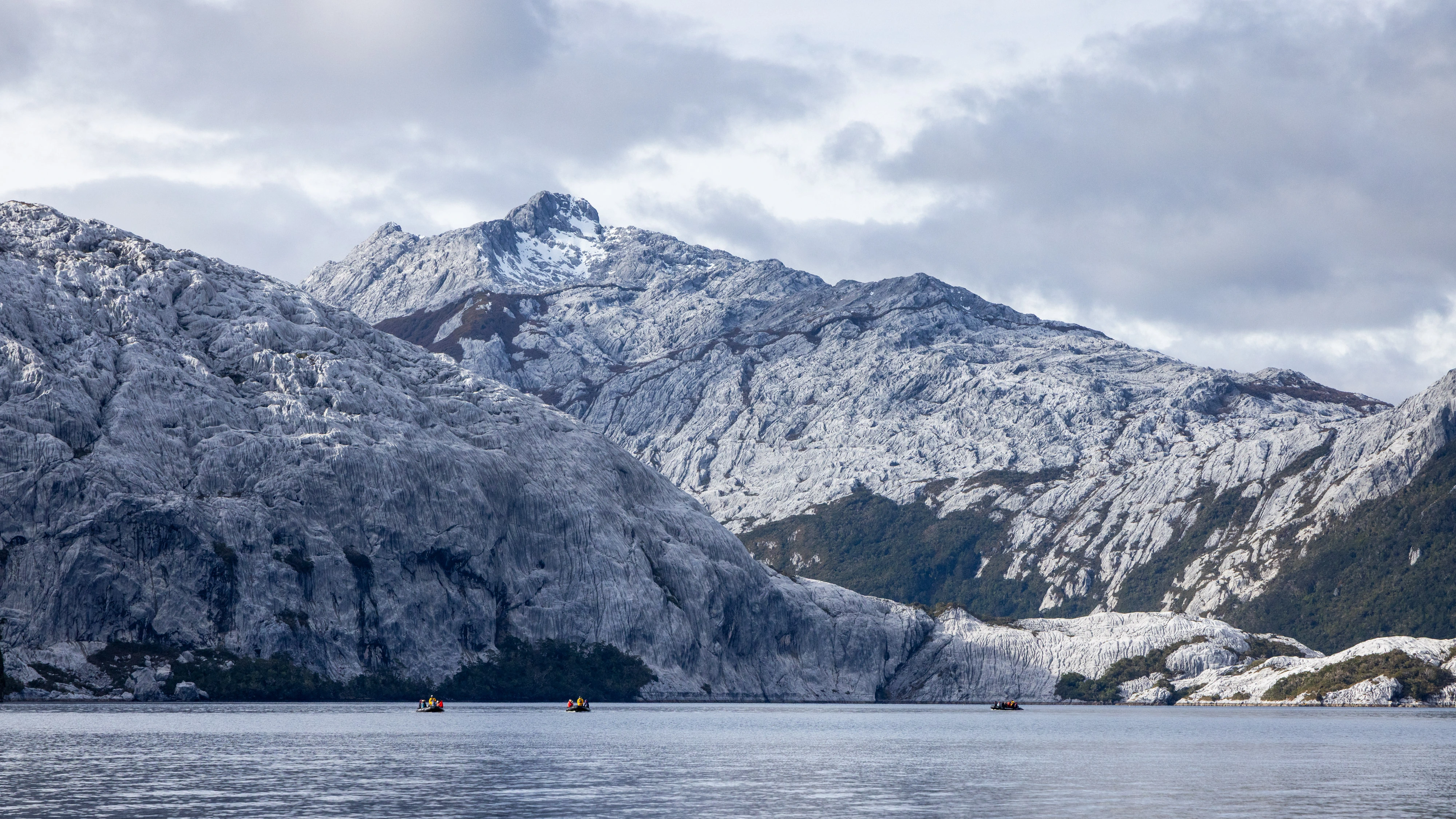
This is Patagonia at its most remote: a place where the landscape, rather than human development, defines the experience.
Among the great natural features of Chilean Patagonia, Pío XI Glacier deserves special attention.
Also known as Brüggen Glacier, it is the largest glacier in the Southern Hemisphere outside Antarctica and one of the most remarkable outlets of the Southern Patagonian Ice Field. It is MASSIVE. Its face stretches an incredible 6km across.
Unlike the familiar image of a glacier steadily retreating, Pío XI has experienced significant advances over recent decades. Its behaviour has differed from that of many other glaciers in the region, making it an important subject of scientific interest.
Why does that matter?
Glaciers respond to a complicated combination of snowfall, temperature, ice dynamics, terrain and the shape of the land and water into which they flow. Their behaviour is not always uniform, even when they occupy the same broad climatic region. Pío XI is a striking reminder that the science of glaciers is more complex than a single global trend might suggest. For anyone with a curiosity about how the natural world works, this is a destination that brings geography and earth science vividly to life.
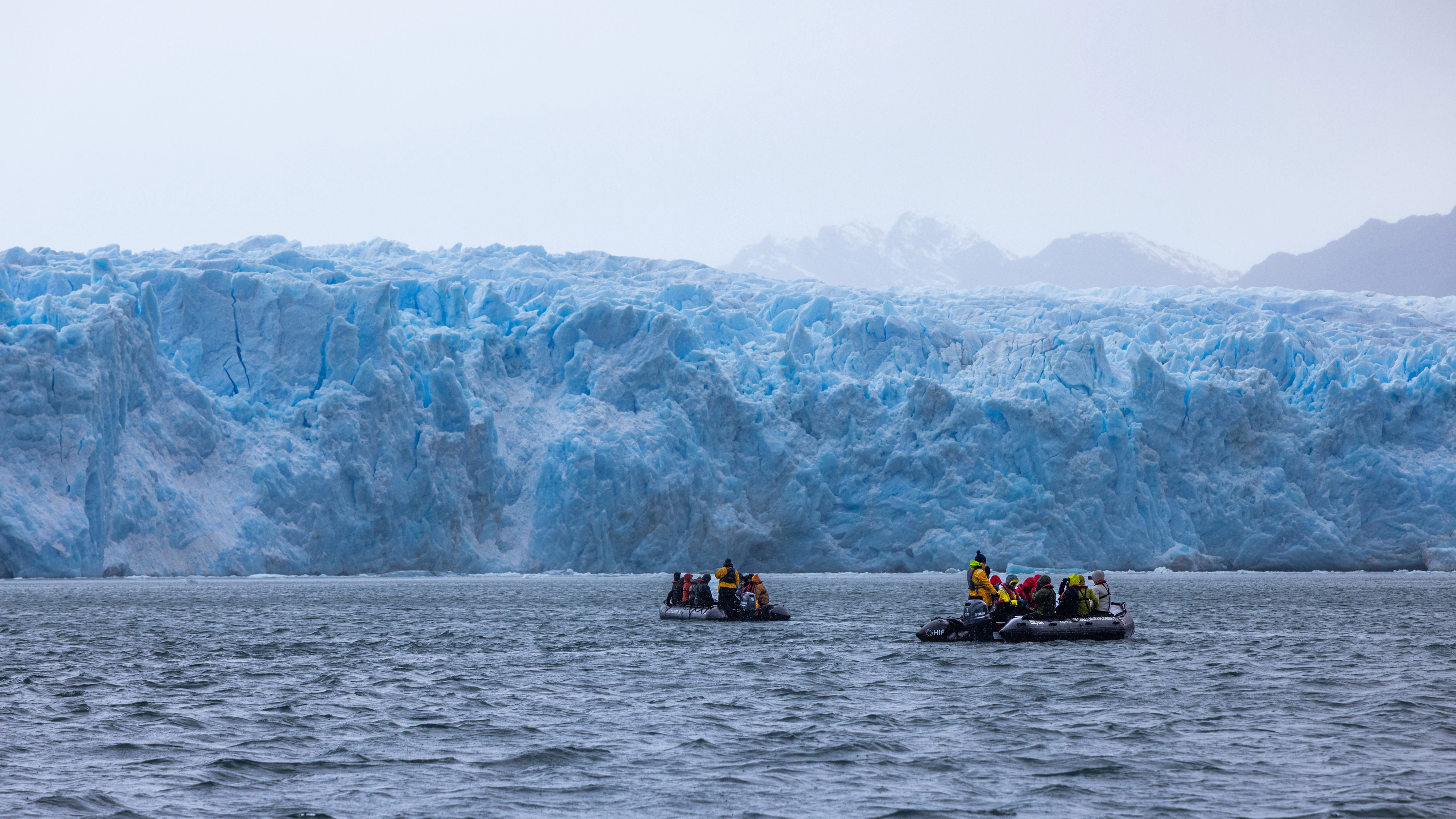
From the water, the glacier's immense scale becomes apparent. Ice descends from the mountains towards the fjord, creating a dramatic meeting of land, water and frozen landscape. Depending on conditions, visitors may see icebergs and fractured ice near the glacier's edge. We were also treated to some serious glacier calving - Chilean thunder.
Pio XI was also the backdrop to an expedition cruising main stay - the Polar Plunge. Or in our case, the Patagonia Plunge including a safety rope, a picture, a warm towel, a badge, and a shot to ‘warm you up’. And yes..it was a little nippy.
Another fascinating feature of the wider Chilean fjords region is Bernal Glacier, reached via the Las Montañas Channel on itineraries that include this area.
Here, the Andes create a dramatic backdrop of steep, snow-covered slopes, waterfalls and forested valleys. The glacier descends towards the coastal environment, illustrating the extraordinary connection between the high mountains and the sea.
The channel itself is spectacular. Long stretches of water are enclosed by rugged terrain, and waterfalls can appear to spill directly from the mountainsides into the fjords below.
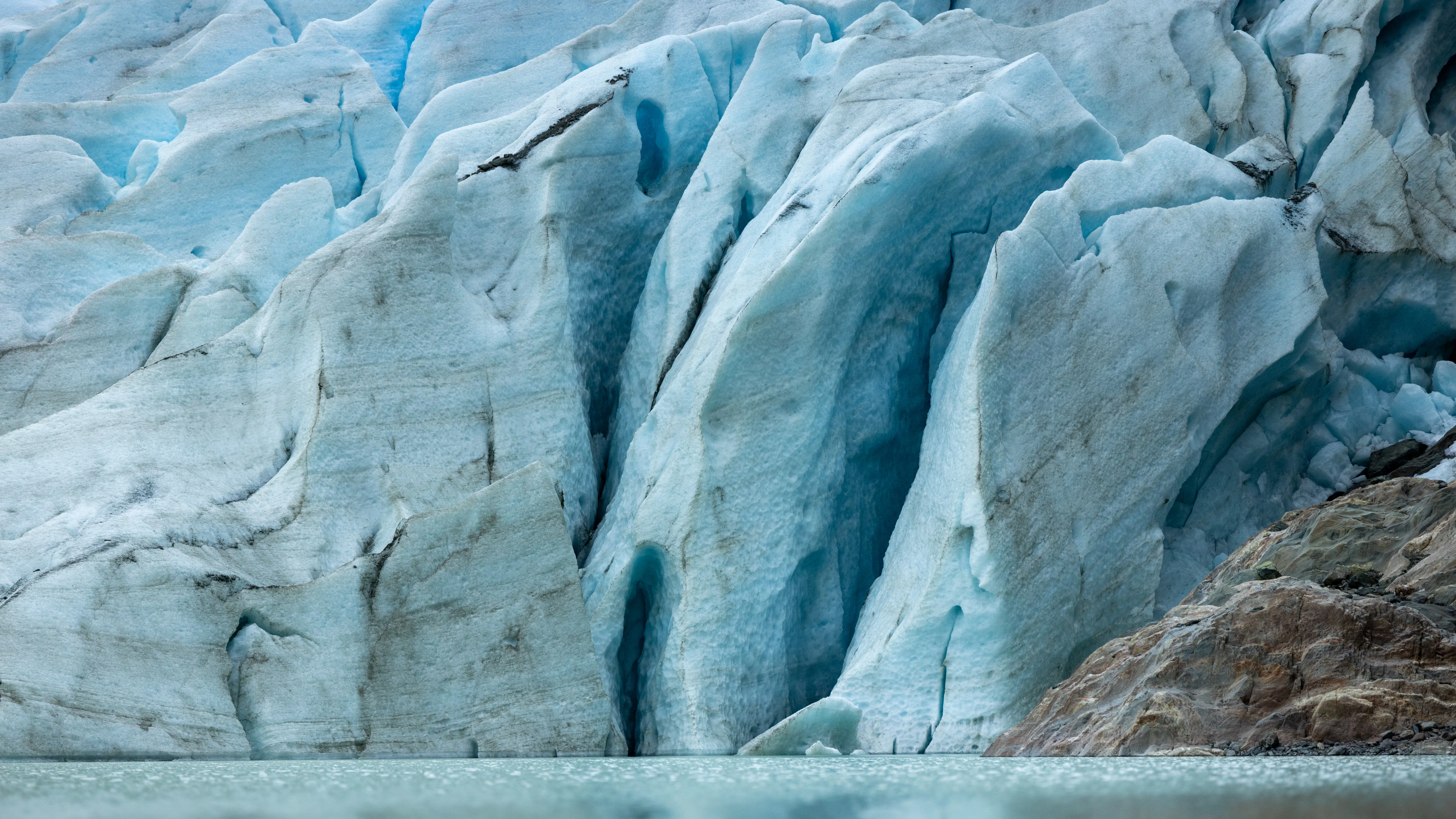
As with other expedition stops, the precise approach and any shore or Zodiac activities depend on the itinerary and prevailing conditions.
The southern waterways of Patagonia reveal another extraordinary chapter in the region's glacial history.
Seno Garibaldi, or Garibaldi Fjord, lies within the remote landscapes of Tierra del Fuego. Here, steep mountain walls rise above deep water, and Garibaldi Glacier descends from the Darwin mountain range towards the sea.
The word seno is commonly used in Spanish for a large inlet or fjord. These waterways are among the most distinctive features of southern Chile, where glaciers carved deep valleys that were later flooded by the ocean.
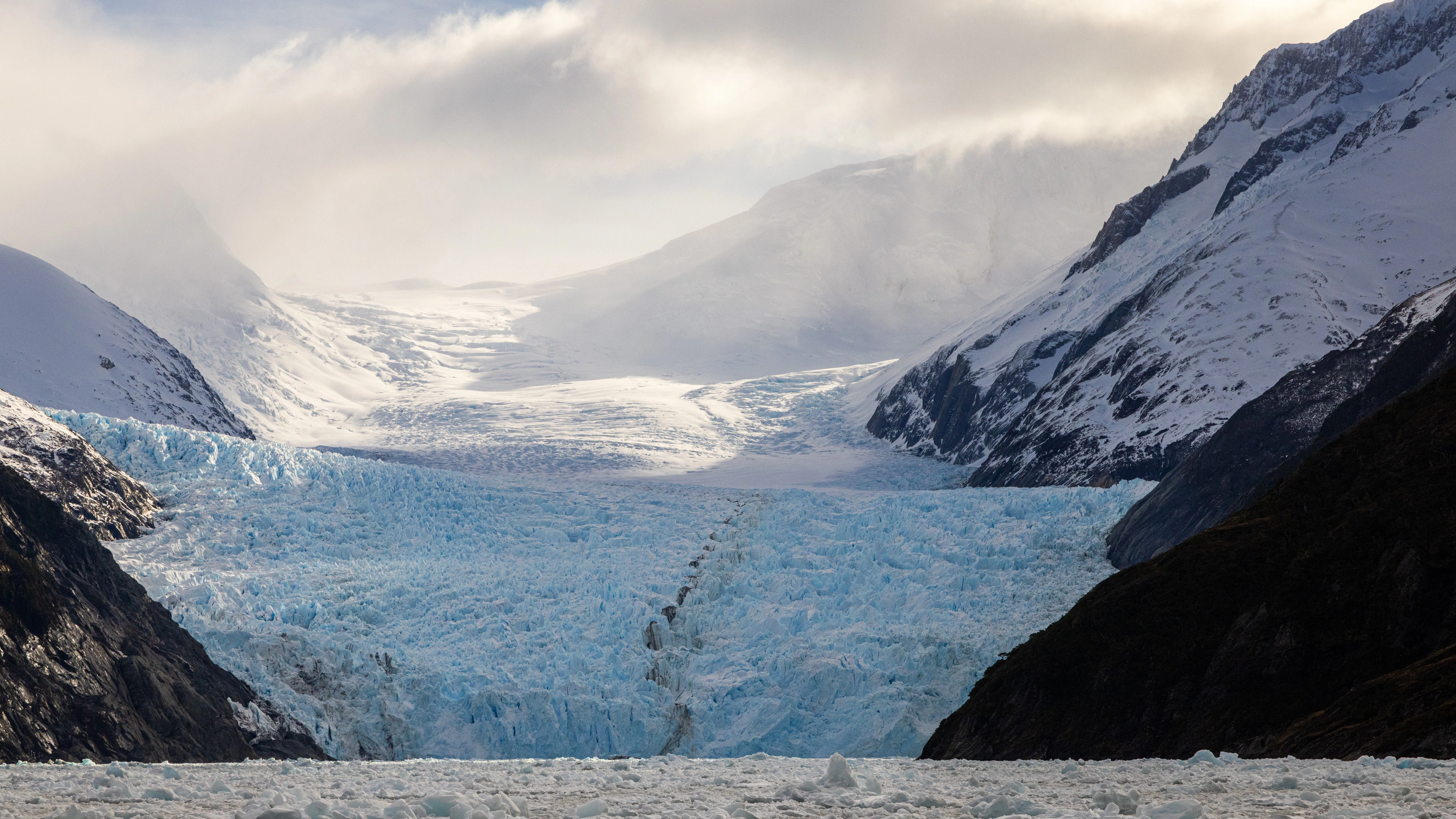
When conditions permit, Zodiac excursions offer a closer view of the glacier and its surrounding landscape. From the water, the scale of the terrain becomes easier to appreciate, and the colours of ice, rock and forest take on a different character.
Seno de Agostini, also known as Agostini Sound, is another spectacular waterway in the Tierra del Fuego region.
Surrounded by rugged mountains and glaciers descending from the Darwin Cordillera, this fjord is a particularly good example of the scenery that makes southern Patagonia so distinctive.
One of its celebrated features is Águila Glacier. Depending on the itinerary and conditions, visitors may have the opportunity to explore the area by Zodiac and see the glacier and its surrounding lagoon more closely.
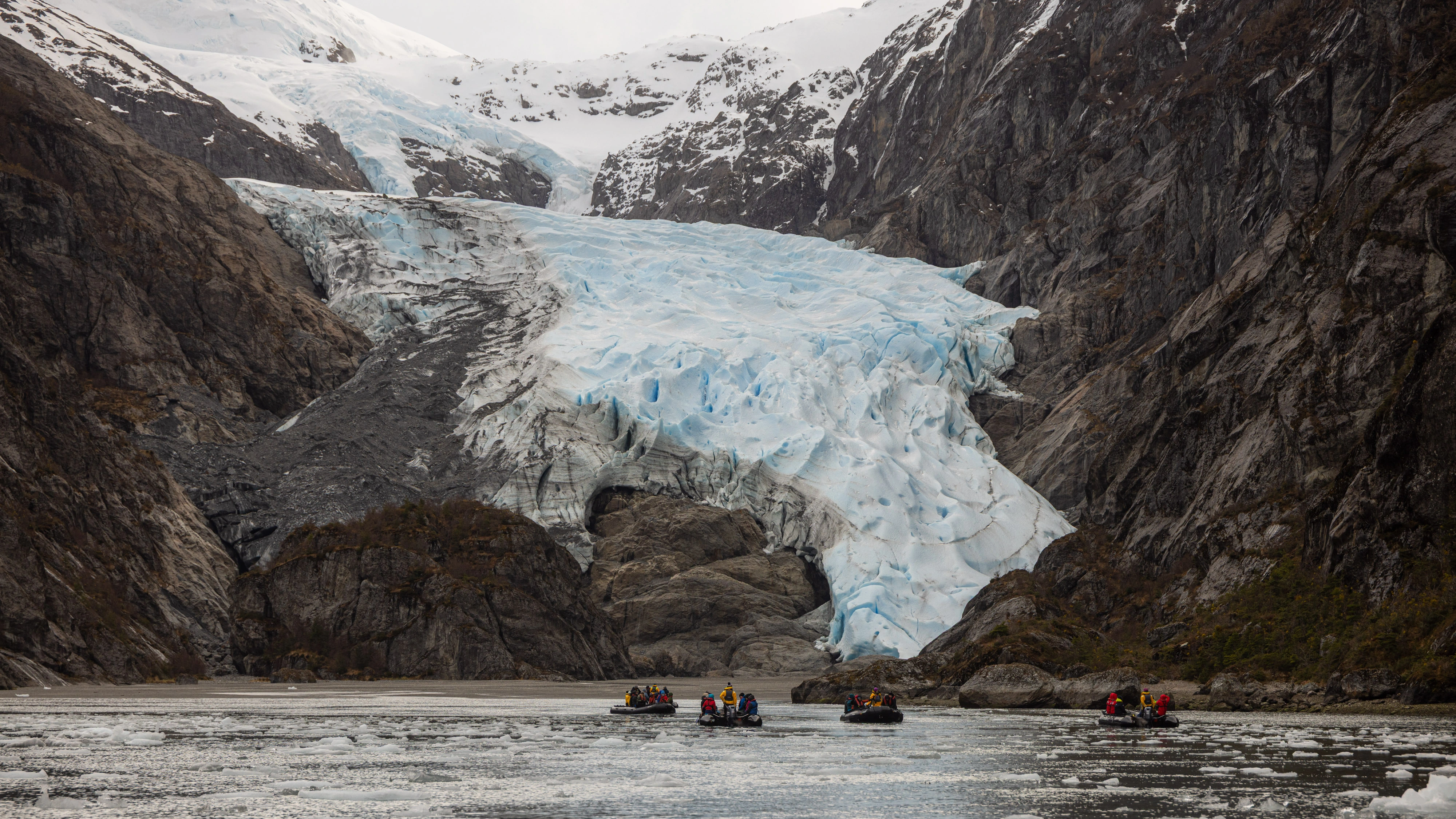
The sound is also part of Alberto de Agostini National Park, named for the Italian missionary, explorer and photographer Alberto María de Agostini, whose work helped document the mountains and glaciers of this remote region.
For travellers interested in photography, this is a place of extraordinary contrasts: pale ice against dark mountains, waterfalls against green forest, and reflective water beneath a sky that can change dramatically within minutes.
Pía Glacier is another memorable feature of the southern Patagonian landscape.
Located in a fjord branching from the Beagle Channel, this impressive glacier extends from the mountains towards the sea. Its long tongue of ice provides a striking illustration of how glaciers flow down from high elevations, shaped by gravity and the accumulation of snow over many years.
The glacier is associated with the Darwin mountain range and the remote wilderness of Alberto de Agostini National Park. It is also a reminder that glaciers are not static monuments. Ice moves, cracks, melts and calves into the water, continually reshaping the landscape.
The fjord leading towards Pía Glacier is every bit as important as the glacier itself. High mountain walls, narrow waterways and the occasional waterfall make the approach part of the spectacle.
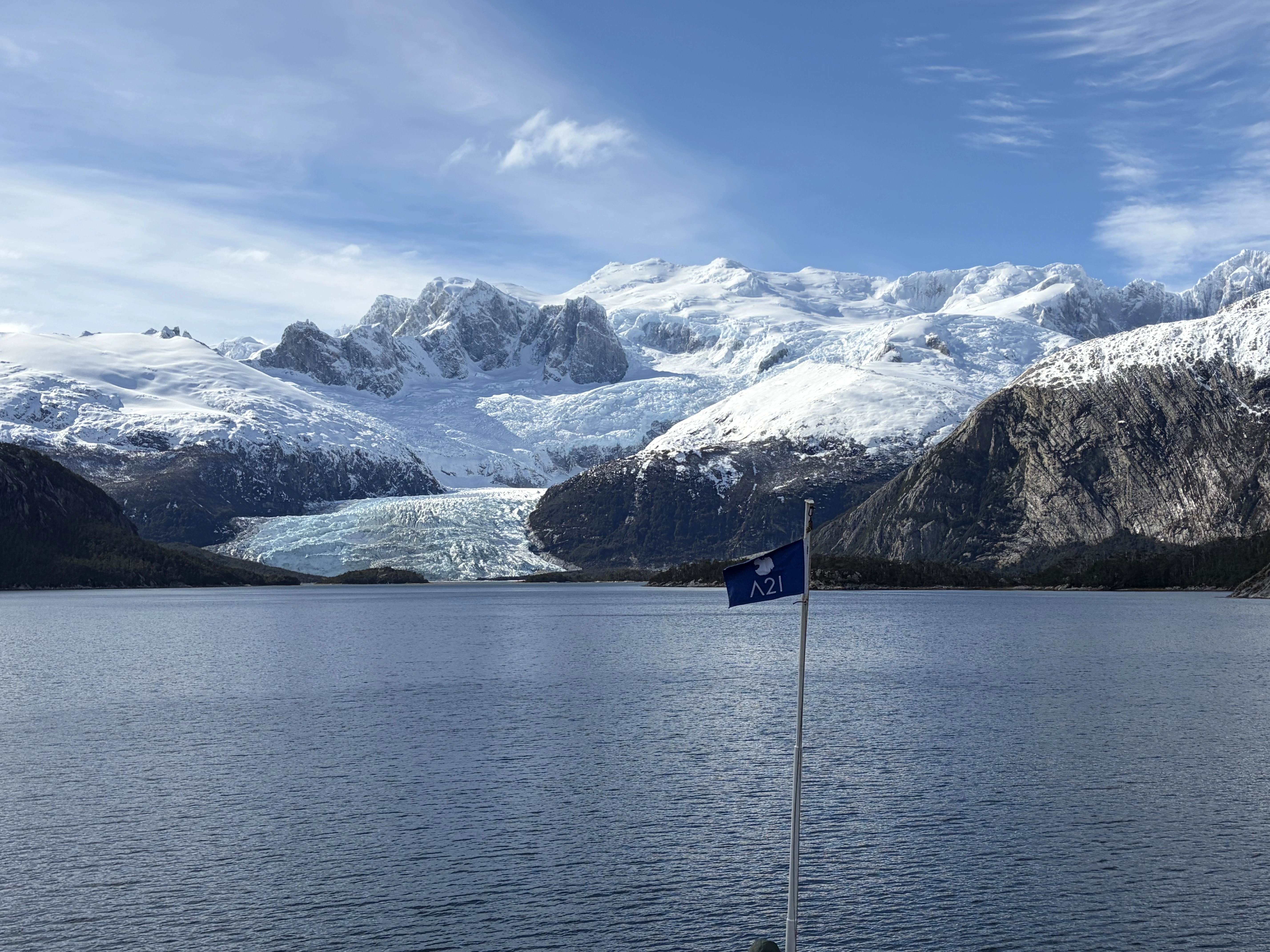
Pía, Garibaldi and Águila glaciers each offer a different perspective on this glacial wilderness. Together, they help explain why southern Patagonia is one of the world's great regions for travellers fascinated by ice and mountains.
Our expedition ended in Ushuaia, Argentina, and what an incredible place it is.
Often described as the southernmost city in the world, Ushuaia sits on the northern shore of the Beagle Channel, backed by the snow-capped mountains of the Martial range. The setting is spectacular: mountains rise almost directly behind the city, while the channel opens out towards islands, distant peaks and the waters leading towards Cape Horn and Antarctica.
Ushuaia has a character all its own. It is a working port, a gateway to Tierra del Fuego National Park and a major departure point for Antarctic expeditions. Its streets combine restaurants, cafés, shops and museums with reminders of the region's maritime and frontier history.
The city's location makes it particularly fascinating for geography lovers. It is close to the southern end of the Andes, surrounded by a landscape shaped by glaciation, and positioned beside a waterway that has played an important role in global exploration.
For many travellers, Ushuaia is a destination in its own right rather than simply the place where a cruise finishes. There is plenty to explore in the surrounding region, from forest walks and mountain scenery to the history of Tierra del Fuego and its Indigenous communities.
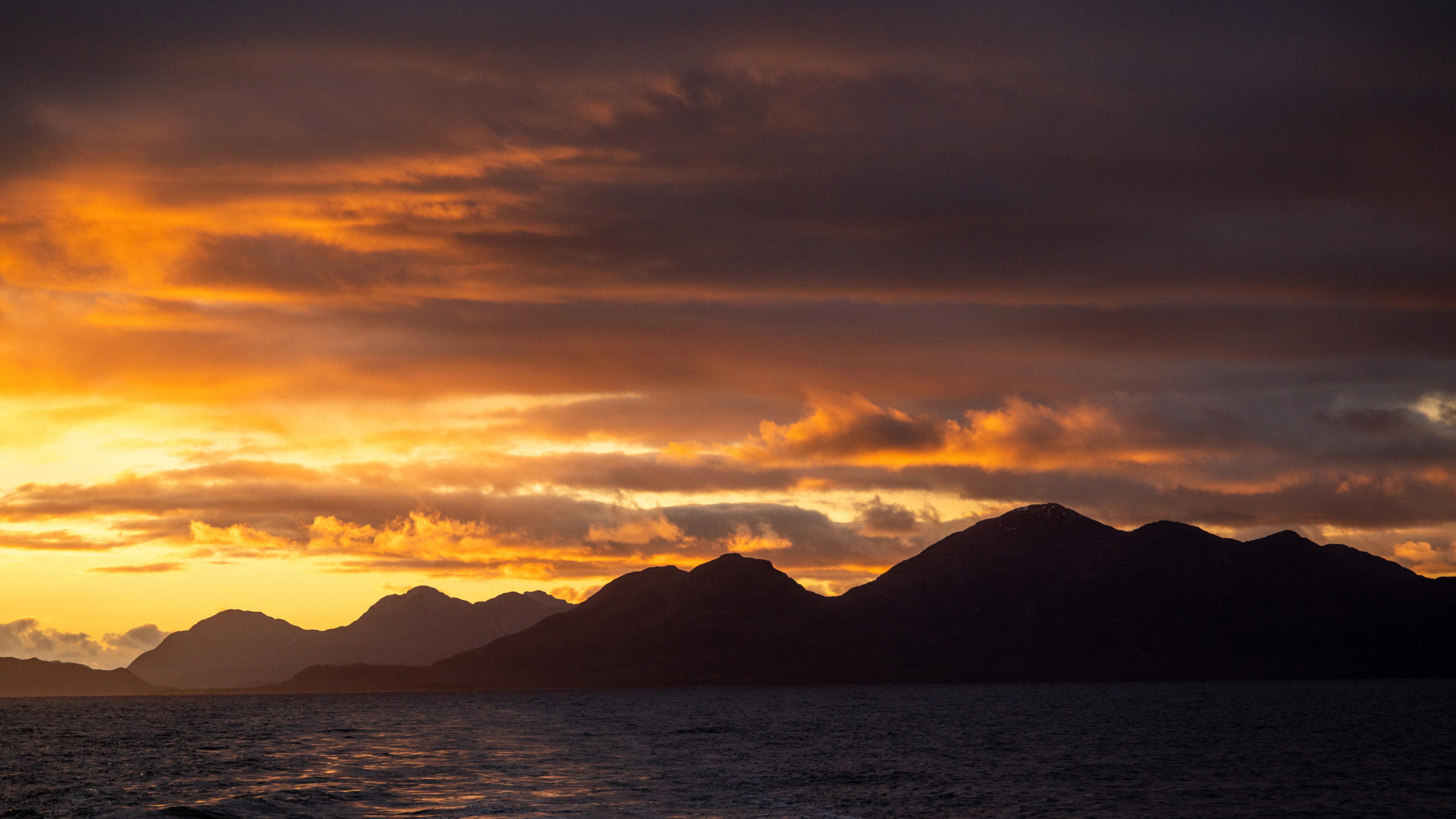
After days of navigating remote fjords and observing glaciers, arriving in Ushuaia felt like reaching a remarkable outpost at the edge of the inhabited world. It was an unforgettable place to disembark—and an excellent reminder that sometimes the end of one journey can be the beginning of another.
The great advantage of a small expedition vessel is access.
Much of Chilean Patagonia is difficult to reach by road. Deep fjords, island chains, glaciers and isolated coastlines create a landscape that is best explored from the water. A ship such as the Magellan Explorer allows travellers to move through this network of waterways while enjoying expert interpretation and opportunities for guided exploration.
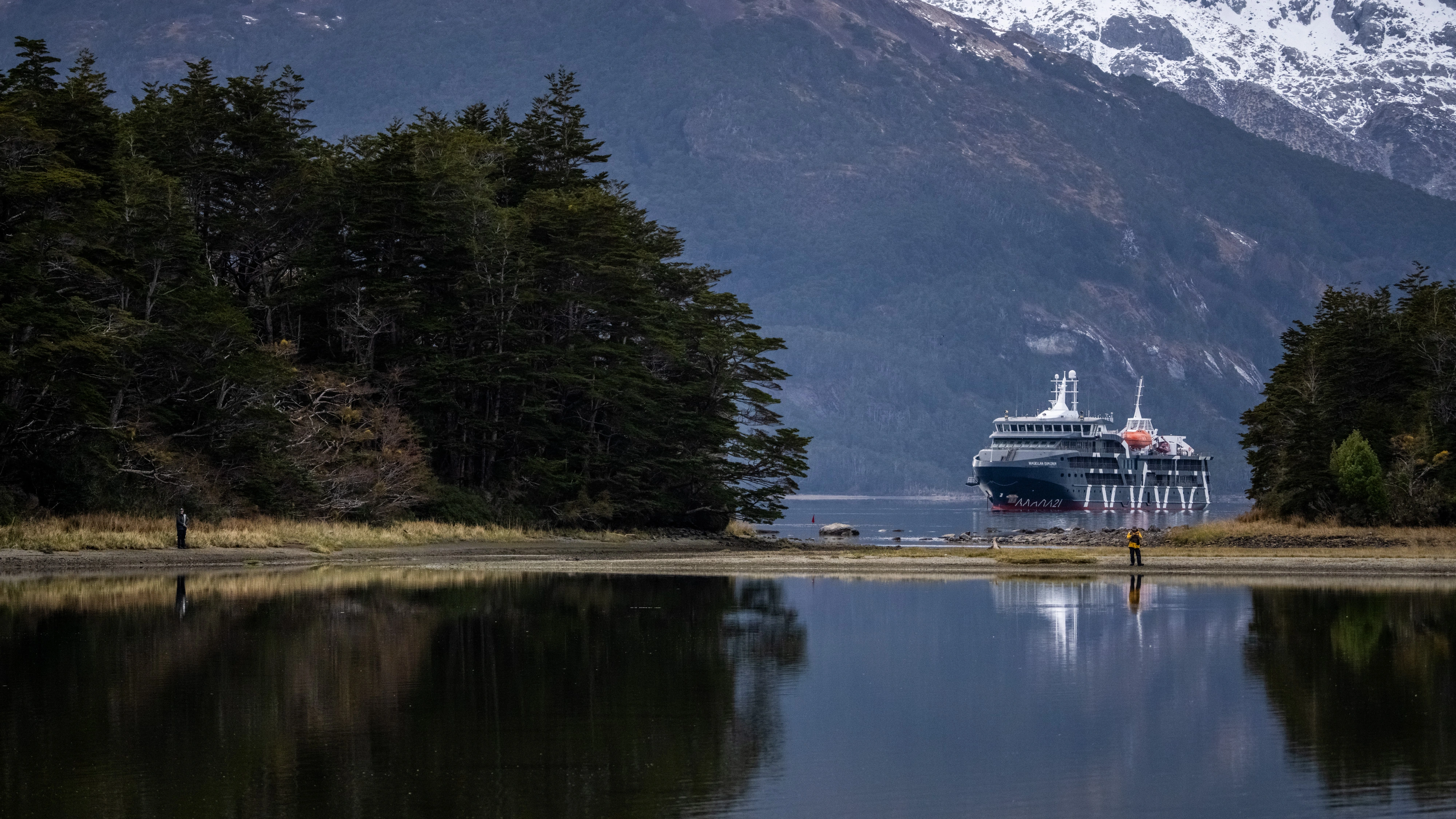
The experience is not about ticking off a long list of ports. It is about watching the landscape change, learning why it looks the way it does, and appreciating the natural forces that have shaped it over thousands of years.
There will be moments of quiet observation, time spent watching the shore from the observation lounge, and days when a glacier or a narrow channel becomes the highlight of the entire voyage. There will also be early starts, scheduled meals, expedition briefings, lectures and the occasional change of plan.
That is the nature of expedition travel. It asks you to be flexible, curious and willing to let the landscape set the agenda.
Weather and sea conditions may alter landing sites and the daily itinerary. Not every landing can be guaranteed, and wildlife sightings are never certain. Safety always comes first.
But when the conditions come together, the rewards can be extraordinary.
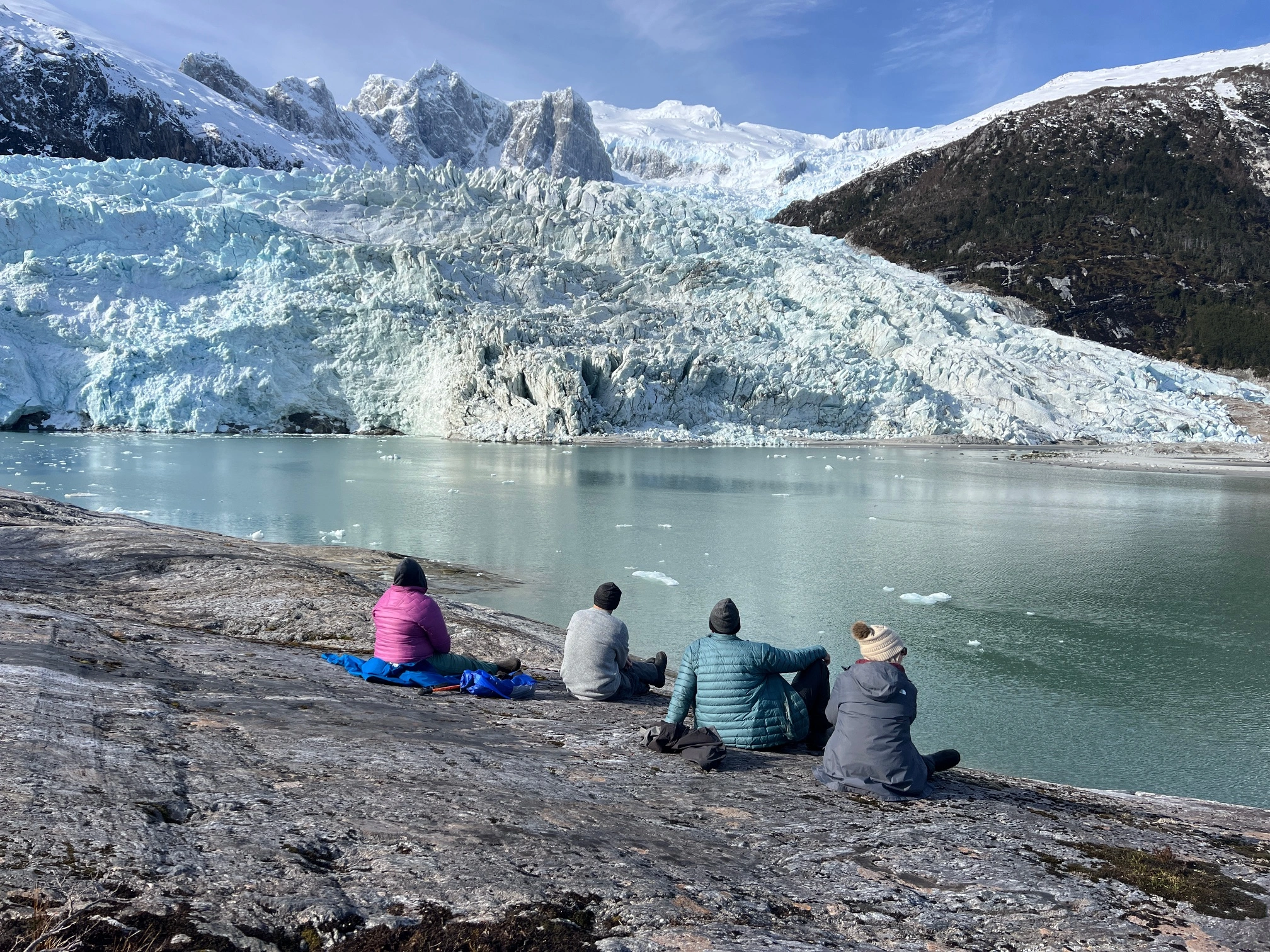
At World Tree Destinations, we believe some journeys are about more than reaching a destination. They are about trying to understanding a place—its geology, wildlife, history and the stories that make it distinctive.
Chilean Patagonia offers all of that in abundance. Its glaciers tell stories of climate and time. Its fjords reveal the power of ice to shape a continent. Its remote islands invite curiosity, while its historic waterways connect modern travellers with centuries of exploration.
Our journey began among the volcanoes of Puerto Varas, continued through the wild fjords of Chile and ended in extraordinary Ushuaia. Along the way, we discovered that an expedition cruise is as much about learning as it is about seeing—and that a day at sea can be every bit as engaging as a day ashore…kinda - the days at shore are so good!
The Magellan Explorer provided a remarkable way to experience this region, combining the comforts of a small expedition ship with the opportunity to venture into some of the most dramatic coastal landscapes on Earth.
For those who feel drawn to the world's wild places, Patagonia is not simply a destination to visit. It is a landscape to experience and remember.
World Tree Destinations — Rooted in Nature. Connected to the World.
 World Tree Destinations
Sign up for our newsletter to learn about the latest product news and deals. Also receive exclusive offers, contest details and giveaways.